Molokini Snorkeling Guide

At a Glance
Most popular on Maui
 Central Maui
Maui Snorkeling Adventure to Molokini and Turtle Town
Visit Maui's famous snorkeling and diving destinations Molokini Crater and Turtle Town on a snorkeling catamaran, with visibility of 100 feet or more.
 South Maui
Feast at Mokapu Luau in Wailea
Discover Hawai'i's most authentic luxury luau at Andaz Maui at Wailea Resort — a curated cultural evening with a three-course plated dinner on Mokapu beach.
 South Maui
Gilligans' Island Luau in Kihei
An intimate luau experience and the only luau in Kihei — less than a quarter the size of the average Maui luau, so every seat has a great view of the show.
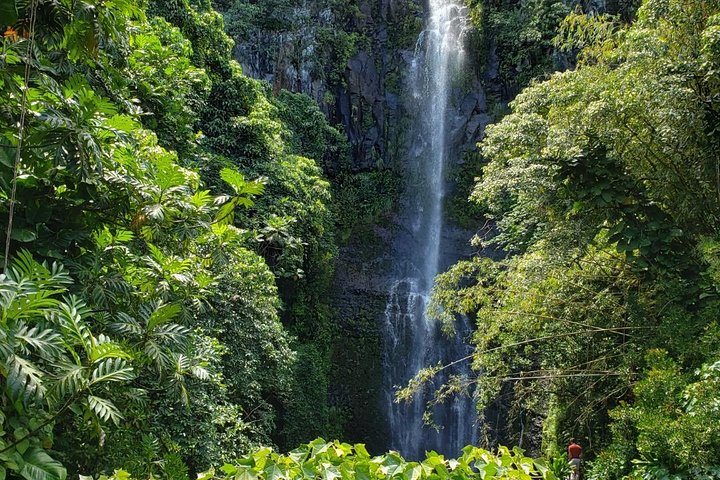 Road to Hāna
Small-Group Road to Hana Adventure Tour with Pickup & Lunch
Watch the waterfalls, black-sand beaches and rainforest go by without anyone in your group behind the wheel.
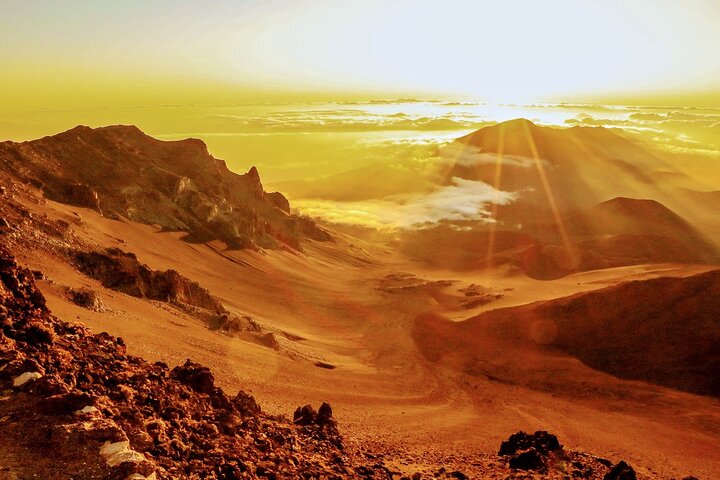 Upcountry
Majestic Haleakalā Sunrise Tour with Pick-up
Ride to the summit for sunrise above the clouds, then unwind over a hot breakfast on the way back down.
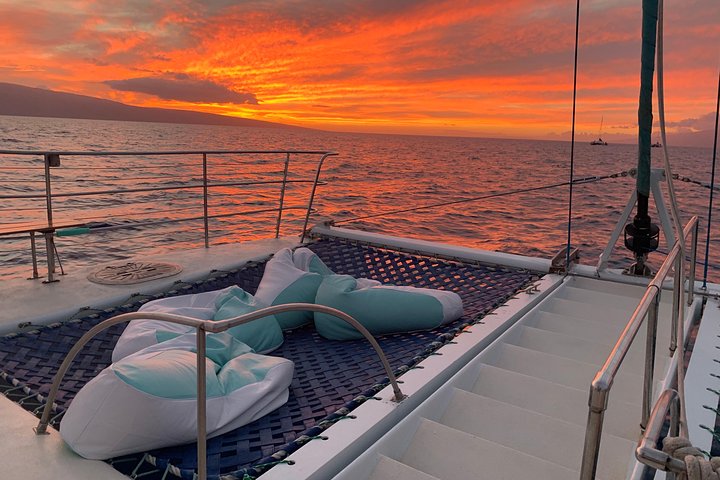 West Maui
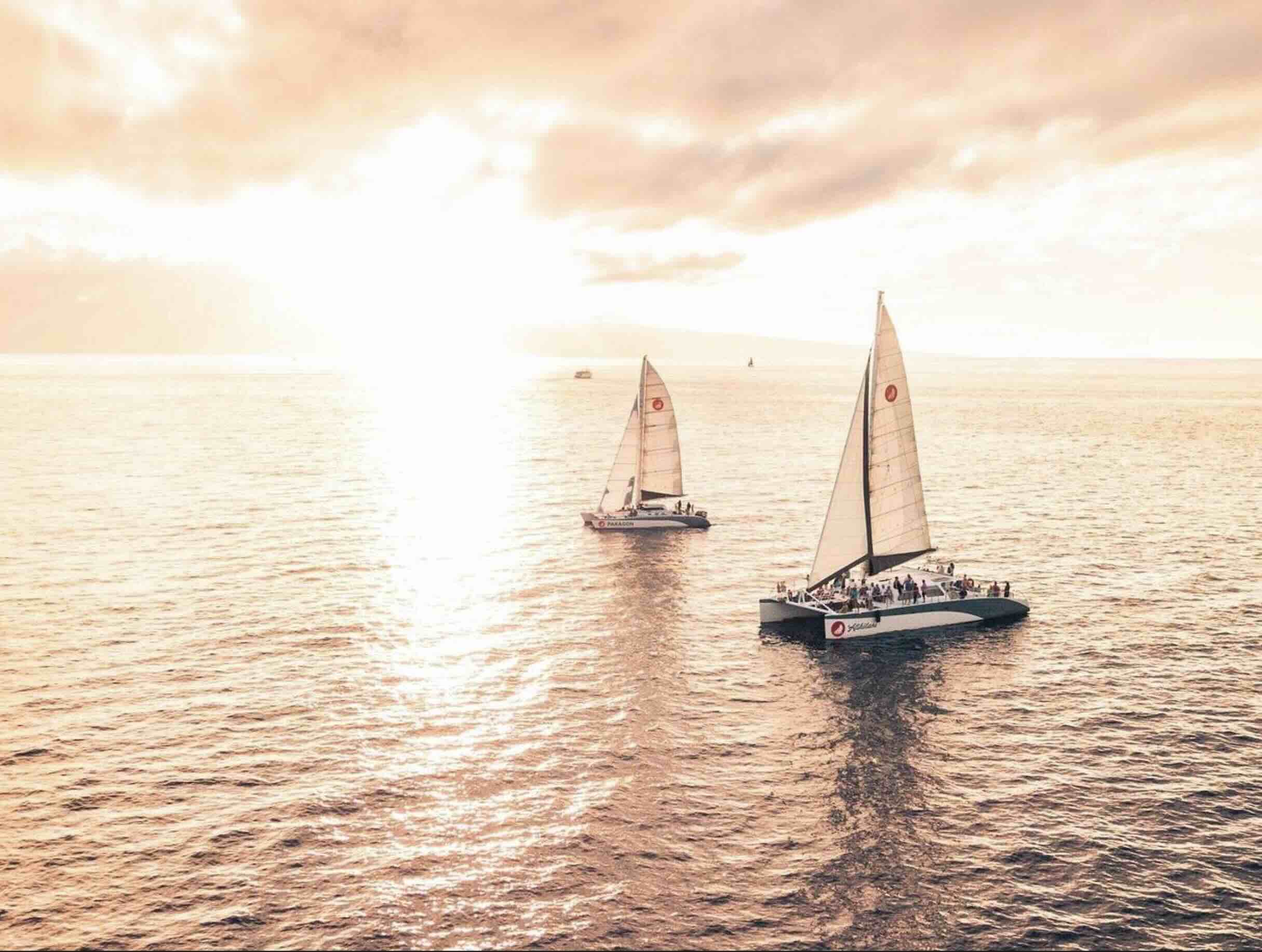
Original Sunset Cruise with Open Bar from Kaʻanapali
Sip an unlimited open bar while the sun drops behind Lānaʻi, with pupus and live music twice a week.
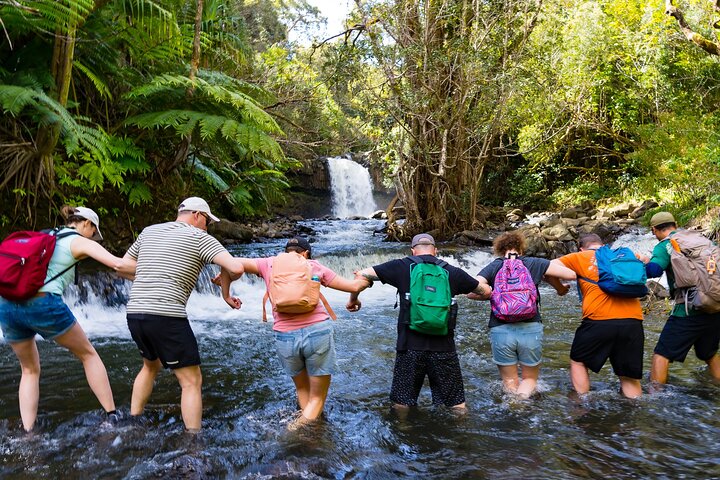 Central Maui
Small Group Waterfall and Rainforest Hiking Adventure
A guided rainforest hike to East Maui waterfalls, with time to swim beneath the falls and a trail lunch included.
 South Maui
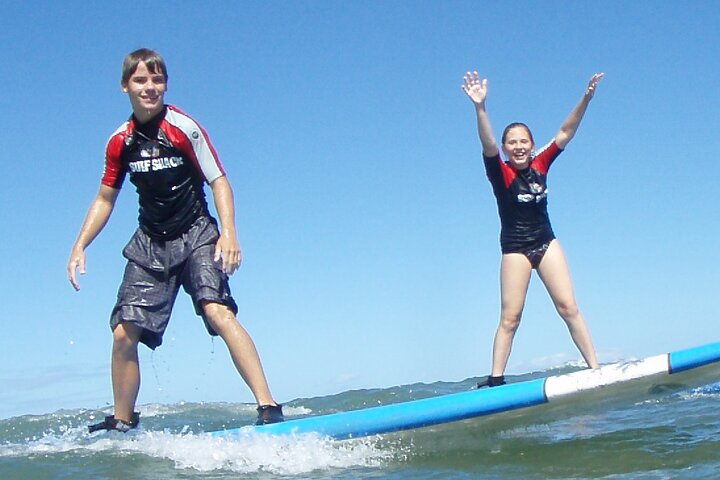
Two Hour Beginner Group Surf Lesson in Kihei
A two-hour beginner lesson in calm South Maui water — board, gear and instruction all included.
 Upcountry
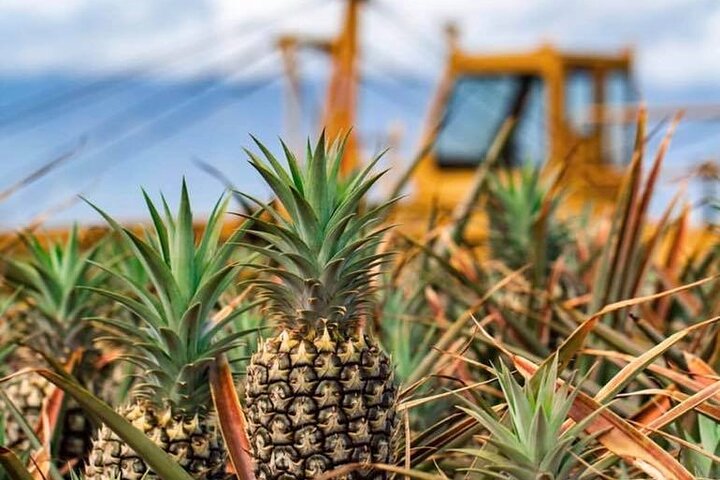
Maui Pineapple Farm Tour in Haliimaile
Tour a working pineapple farm and packing house upcountry, with tastings and a fresh pineapple to take home.
The Crater
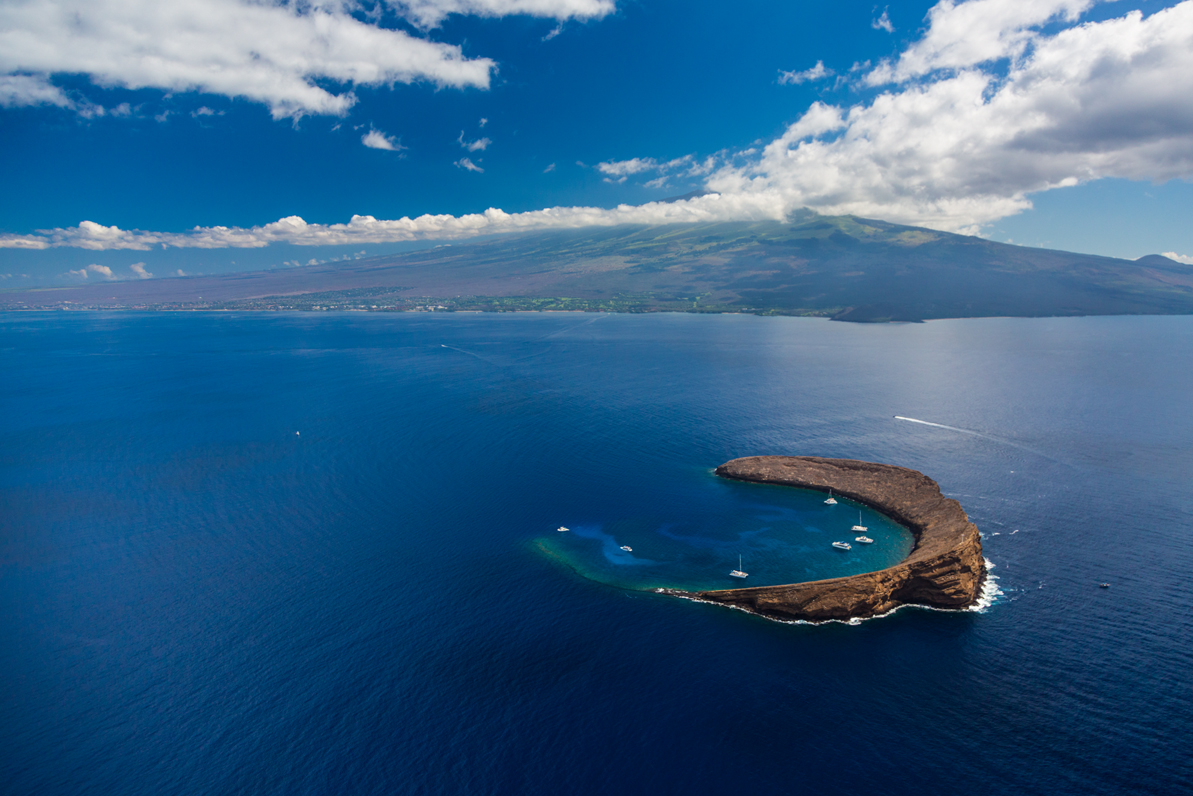
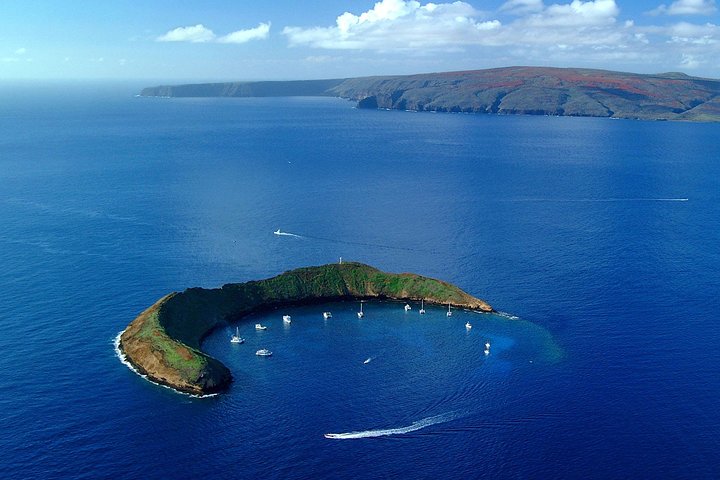
A sunken volcanic crescent three miles offshore, reachable only by boat. The draw is the setting and the water clarity, not a fish count you can promise anyone.
- Why go — Open-ocean snorkeling you cannot reach from any beach.
- The experience — A crossing, a moored boat inside the crescent, and gear and crew handled for you.
- The tradeoff — You are committed to the vessel for the whole morning.
- The risk — Wind builds later and the channel gets rough. Conditions cancel trips.
Molokini — about three miles off the southwest coast of Maui. Boats leave from Māʻalaea Harbor and the Kīhei boat ramp.
The crescent shelters the inside of the crater, which is why the visibility holds up there when the open channel is already choppy.
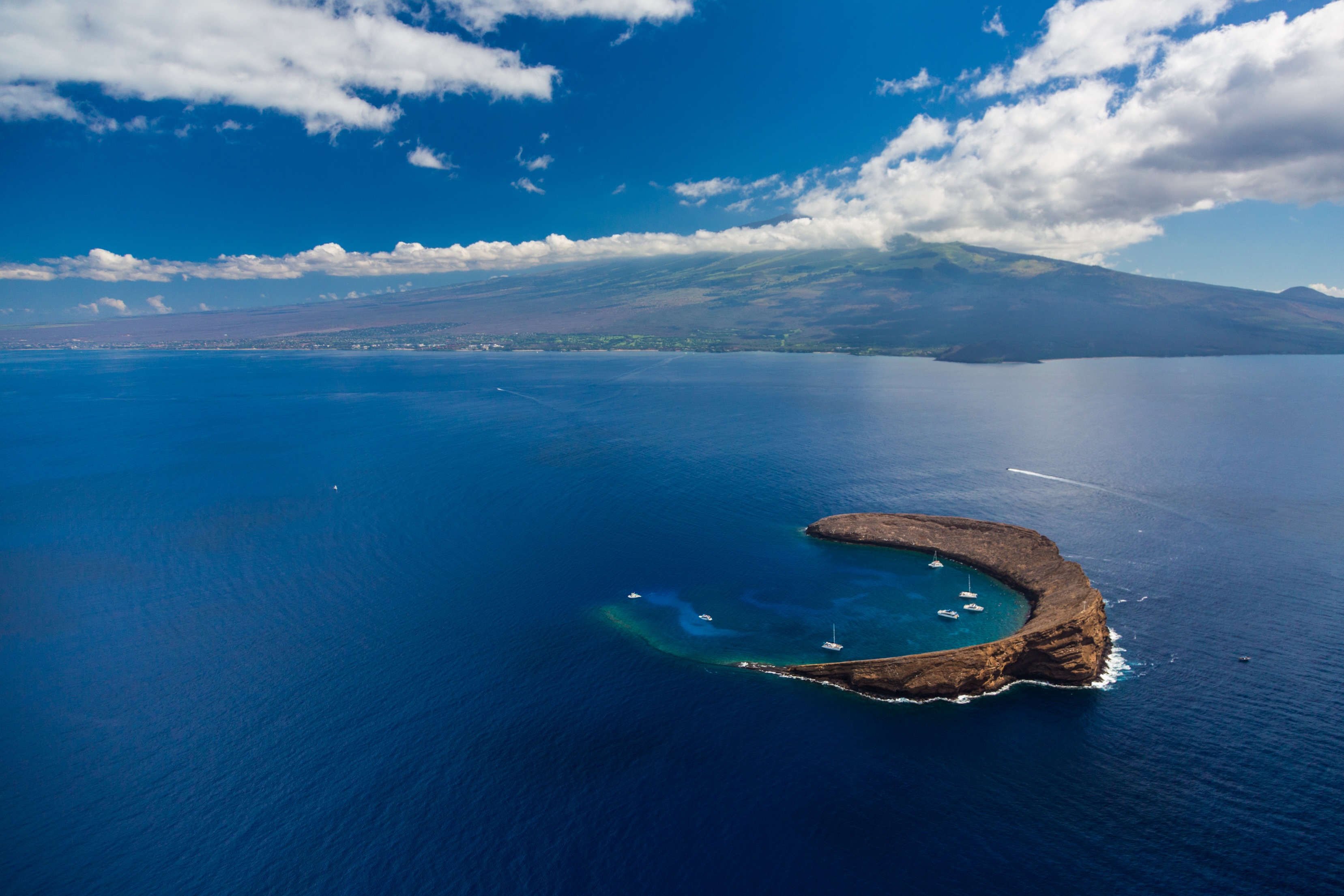
Molokini, off South Maui. Photo: Hawaii Tourism Authority (HTA)
What the State Protects
Molokini is a Marine Life Conservation District, and the state's Division of Aquatic Resources publishes the rules. Subzone A covers the waters and submerged lands inside the crater; Subzone B extends 100 yards seaward of the shoal and Subzone A. Taking marine life is prohibited, as is taking or altering sand, coral or any other geological feature, feeding fish, and anchoring where a day-use mooring system is established.
That 100 yards is the edge of Subzone B and nothing else. It is not the separate 100-yard rule about approaching humpback whales, which applies everywhere in Hawaiʻi and has nothing to do with this boundary.
You Cannot Land on It
The islet above the waterline is a state seabird sanctuary and the Division of Forestry and Wildlife states plainly that it is CLOSED under administrative rules Chapter 126, and that visiting Molokini is prohibited. No operator can put you ashore, and none should offer to.
ʻUaʻu kani, the wedge-tailed shearwaters, are the main residents, with ʻiwa, the frigate birds, soaring over the rim. Those are what you actually see above the water, and the reason the rock is closed.
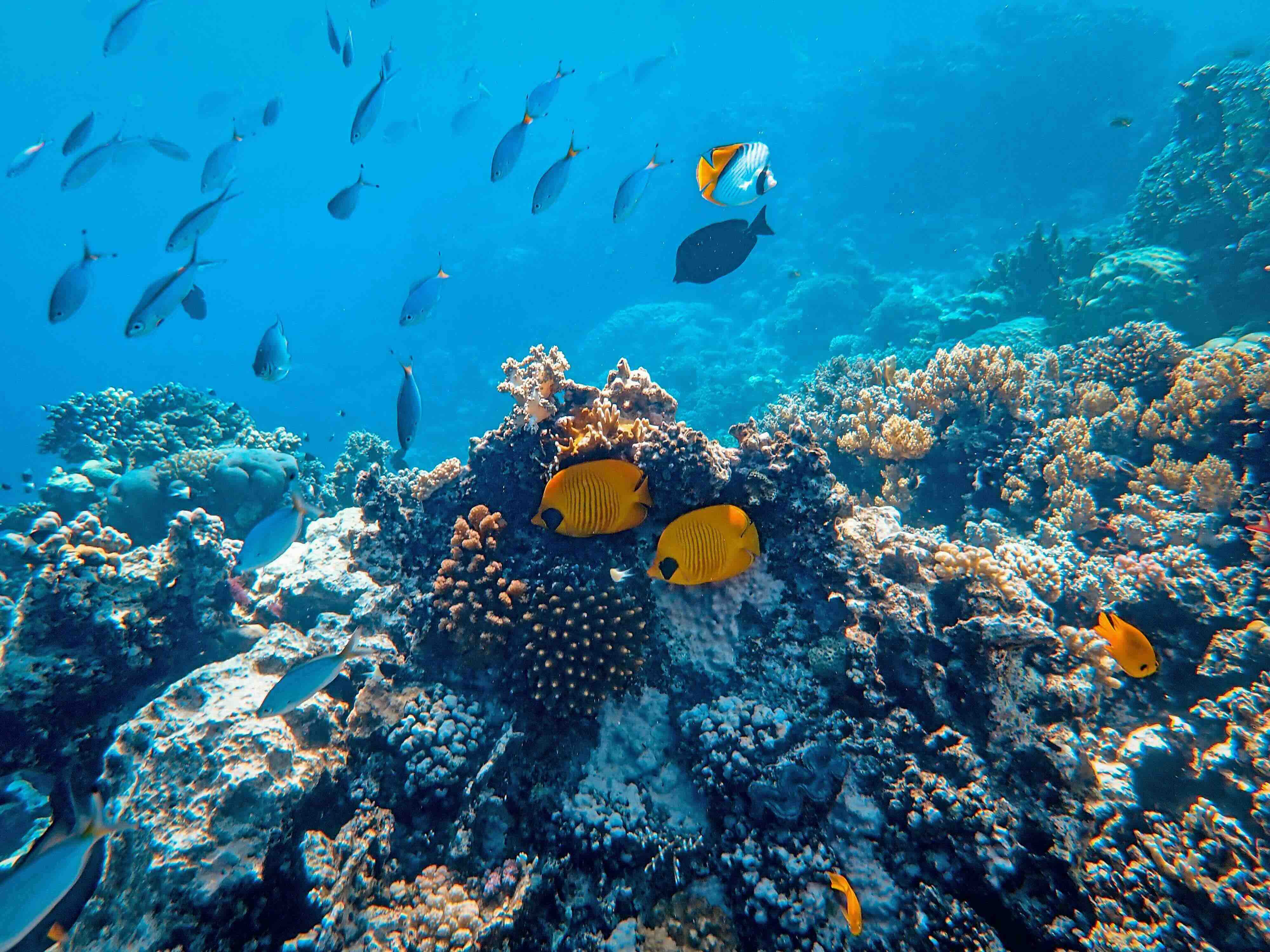
Reef fish underwater. Photo: Hawaii Tourism Authority (HTA)
Picking an Operator
The boat changes the day more than the destination does. Pick the vessel, then the itinerary.
- Why it matters — Same crater, completely different morning.
- The experience — A large catamaran gives you shade, bathrooms and easy boarding. A raft gives you speed and a small group.
- The tradeoff — Smaller usually costs more per person.
- The risk — The cheapest trip is cheap for a reason, and it is usually the head count.
A family with two young children is normally better on the bigger boat. A couple who hates crowds is normally better on the smaller one, even at the higher price.
What to Ask Before You Book
Ask how many passengers the boat carries and how many it will actually have that morning. Ask how much time you get in the water at each stop, not how long the trip runs. Ask which harbor it leaves from, because that decides your drive. Ask what happens if conditions cancel the crossing, and get the answer before you pay.
Ask one more thing: whether the operator holds a DLNR permit for Molokini. Commercial activity that puts people in or on the water there is permitted only under a state permit, so it is a fair question and a legitimate one, and any operator working the crater properly can answer it without hesitating.
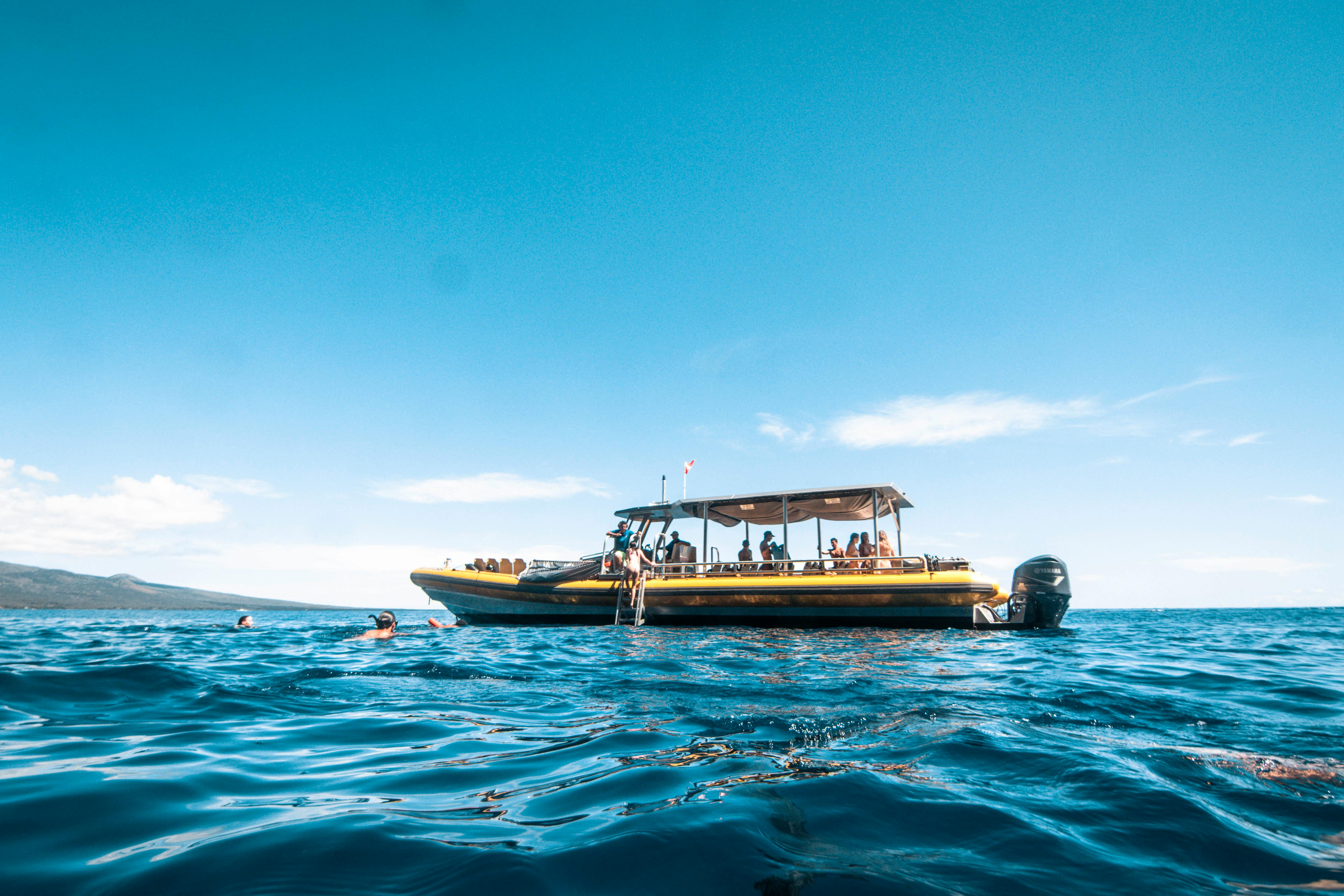
A snorkel raft offshore. Photo: Jake Houglum / Pexels
What the Morning Actually Looks Like
A four-hour trip is not four hours of snorkeling. Budget the day around the crossing, not the brochure.
Morning departures are the normal choice because the trade winds tend to build later and can make the channel rougher. Booking early in your vacation also leaves room to reschedule if the weather takes the trip away from you.
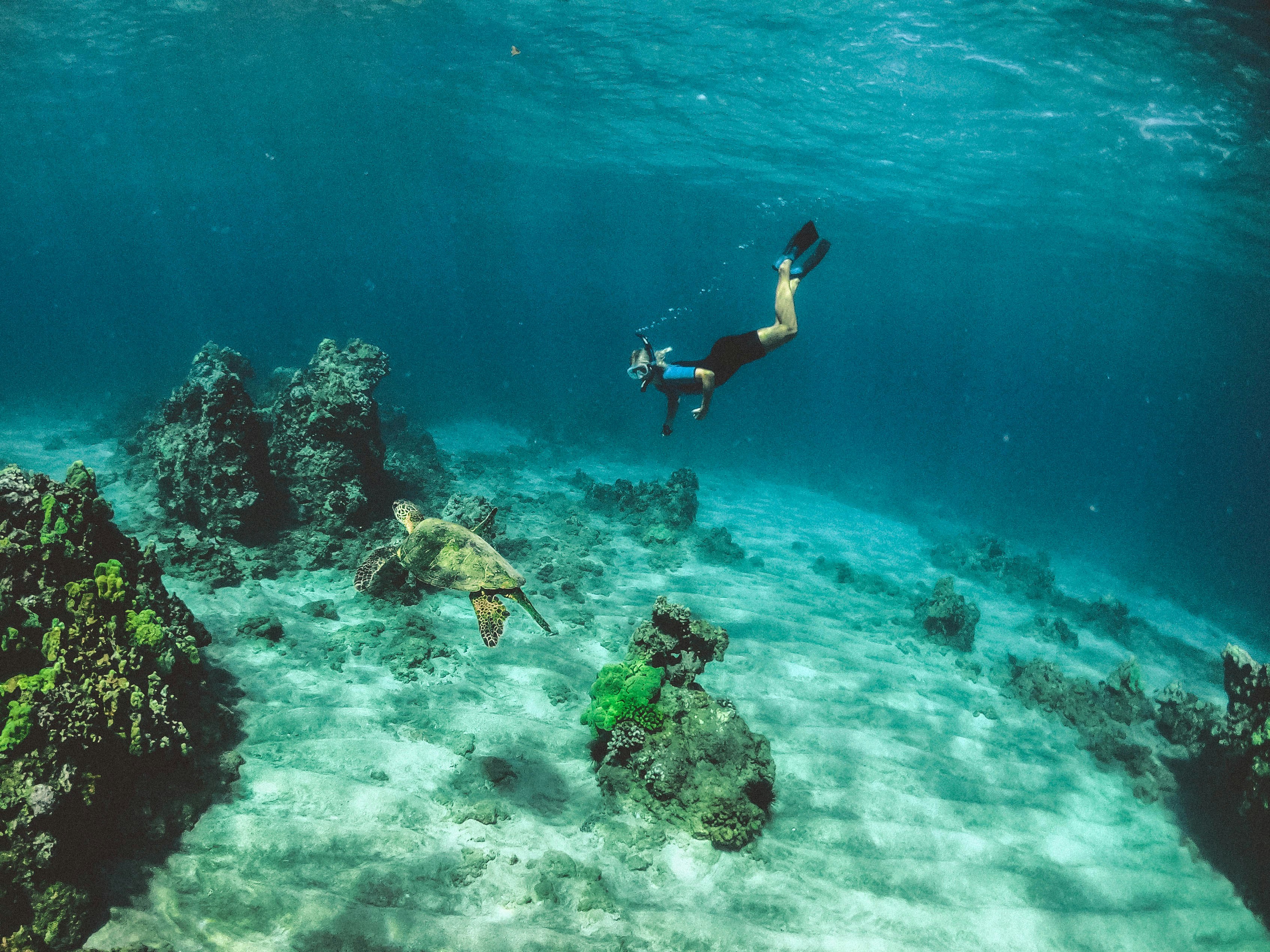
Most trips pair the crater with a second, coastal stop — usually the Turtle Town reefs off Mākena. The crater gives you the offshore environment, the second stop adds a shallow reef and a chance, never a promise, of seeing honu. More on that in our guide to where to see turtles on Maui.
Where Molokini Fits
Molokini is a boat day. It is not the only good snorkeling on Maui and it is not a requirement.
The shore reefs at Ulua, Mōkapu, Maluaka, Kahekili and Kapalua Bay are excellent in their own right and cost nothing. Which ones suit which day is the job of our best snorkeling on Maui guide, and that is where the detail lives.
What to Book
Molokini and Turtle Town combination trip.
Small-group Molokini trip.
Private charter.
Practical Tips
Take seasickness seriously before you board. Anything you swallow after the symptoms start is too late.
Bring a light layer for the crossing. The wind on the water is colder than the beach you left.
Ask for in-water time rather than trip length. A four-hour trip can mean well under an hour at the crater.
Book early in your trip, not on the last morning. Weather cancels crossings and you want a second chance at it.
Do not pick on price alone. The cheapest boat is usually the fullest one.
Treat wildlife as a bonus and not a purchase. Nobody can promise you a turtle.
Frequently Asked Questions
Is Molokini worth it?
Yes if you want an offshore boat morning that you cannot get from any Maui beach. No if your only goal is an hour of snorkeling and you would rather not be on a boat for four.
Can you land on Molokini itself?
No. The islet above the waterline is a state seabird sanctuary, closed under administrative rules Chapter 126, and visiting it is prohibited.
Which harbor do Molokini trips leave from?
Māʻalaea Harbor and the Kīhei boat ramp. Check which one before you book, because it decides your drive.
Is Molokini better than shore snorkeling in South Maui?
Different, not better. The crater gives you an offshore setting; the South Maui shore reefs give you flexibility and cost nothing.
Is Molokini good for beginners?
It can be, because a good crew provides flotation and supervision. A calm, sandy-entry beach is still the easier place to learn the basics.
What should I ask an operator before booking Molokini?
Group size, in-water time per stop, departure harbor, the cancellation plan for rough conditions, and whether they hold a DLNR permit for commercial activity at Molokini.