Best Waterfalls on Maui

At a Glance
Most popular on Maui
 Central Maui
Maui Snorkeling Adventure to Molokini and Turtle Town
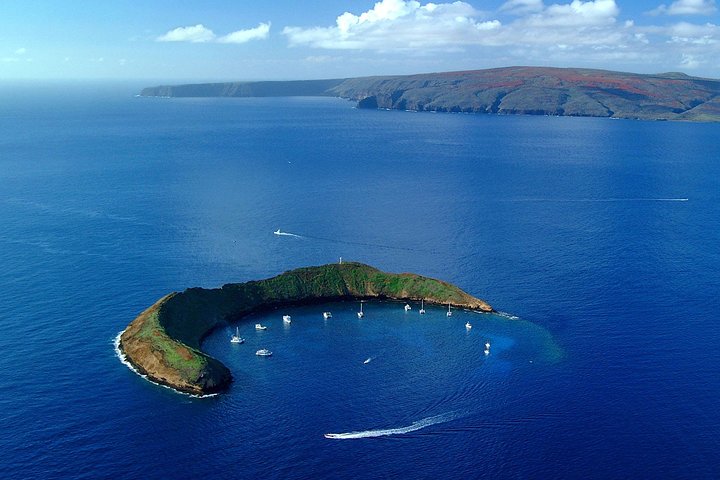
Visit Maui's famous snorkeling and diving destinations Molokini Crater and Turtle Town on a snorkeling catamaran, with visibility of 100 feet or more.
 South Maui
Feast at Mokapu Luau in Wailea
Discover Hawai'i's most authentic luxury luau at Andaz Maui at Wailea Resort — a curated cultural evening with a three-course plated dinner on Mokapu beach.
 South Maui
Gilligans' Island Luau in Kihei
An intimate luau experience and the only luau in Kihei — less than a quarter the size of the average Maui luau, so every seat has a great view of the show.
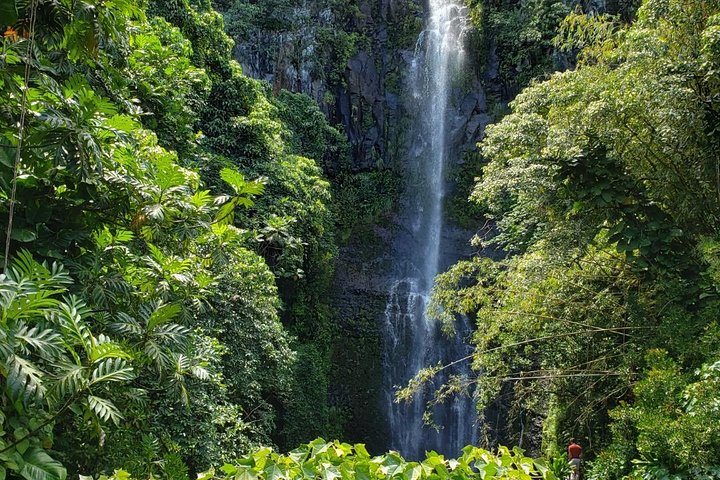 Road to Hāna
Small-Group Road to Hana Adventure Tour with Pickup & Lunch
Watch the waterfalls, black-sand beaches and rainforest go by without anyone in your group behind the wheel.
 Upcountry
Majestic Haleakalā Sunrise Tour with Pick-up
Ride to the summit for sunrise above the clouds, then unwind over a hot breakfast on the way back down.
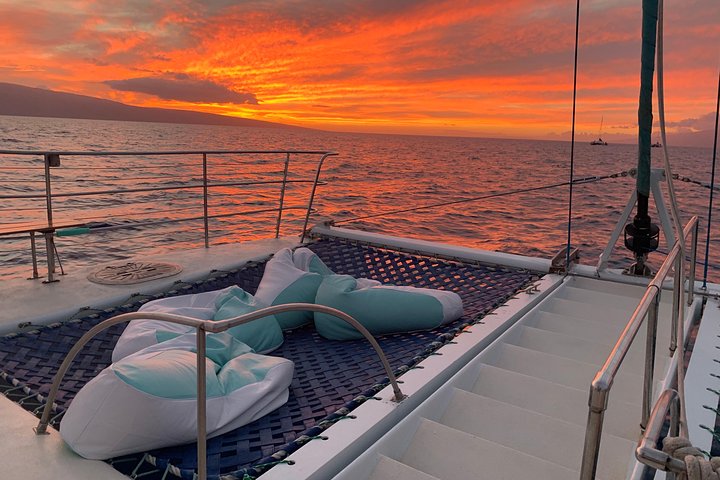 West Maui
Original Sunset Cruise with Open Bar from Kaʻanapali
Sip an unlimited open bar while the sun drops behind Lānaʻi, with pupus and live music twice a week.
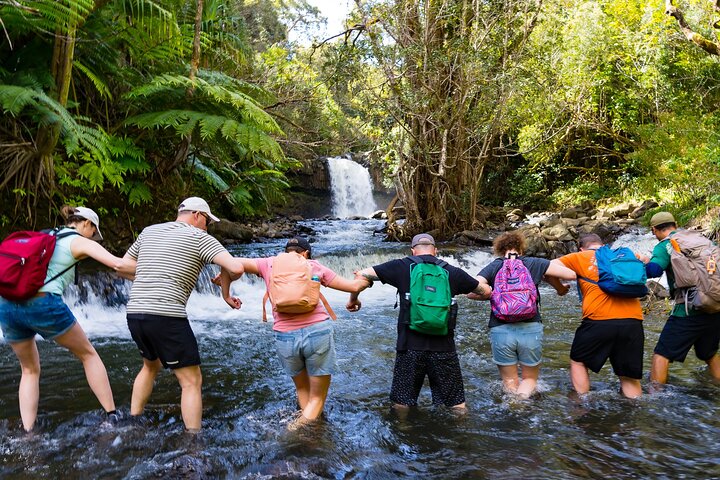 Central Maui
Small Group Waterfall and Rainforest Hiking Adventure
A guided rainforest hike to East Maui waterfalls, with time to swim beneath the falls and a trail lunch included.
 South Maui
Two Hour Beginner Group Surf Lesson in Kihei
A two-hour beginner lesson in calm South Maui water — board, gear and instruction all included.
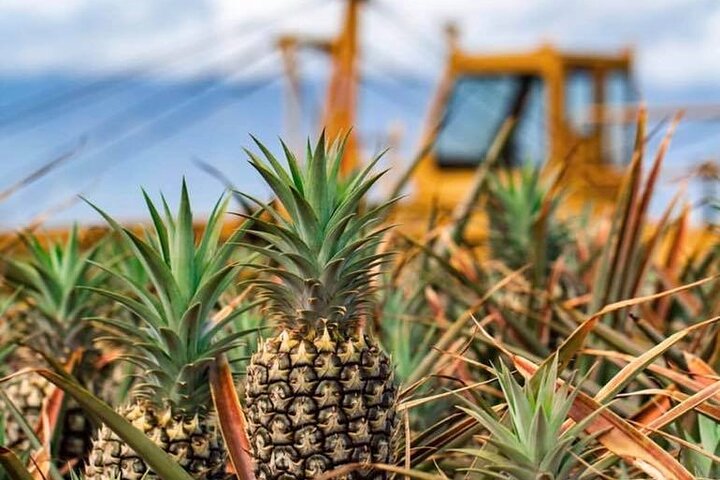 Upcountry
Maui Pineapple Farm Tour in Haliimaile
Tour a working pineapple farm and packing house upcountry, with tastings and a fresh pineapple to take home.
Waterfalls and Rain
More water is not automatically better, and the day the falls look best is the day the streams are most dangerous.
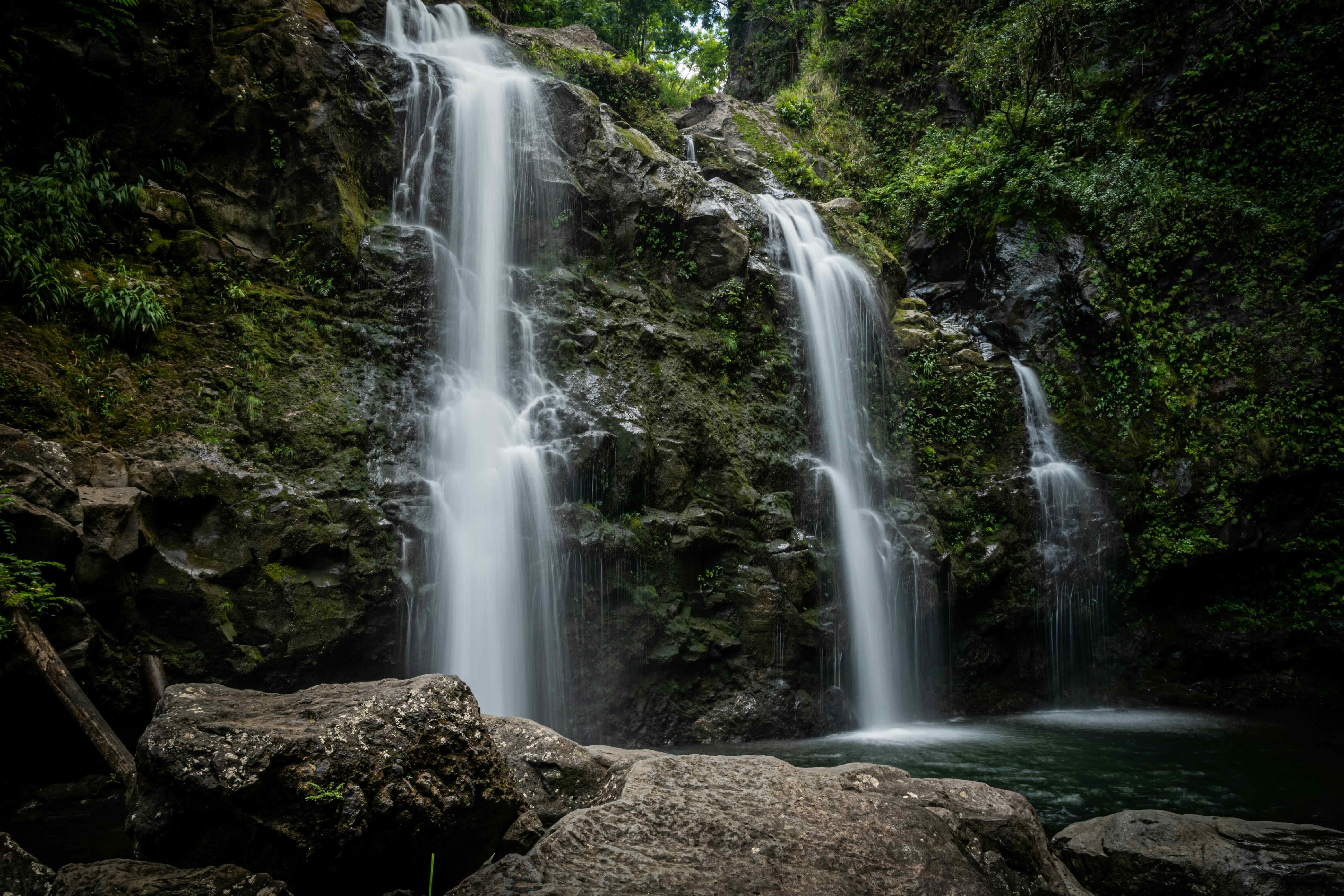
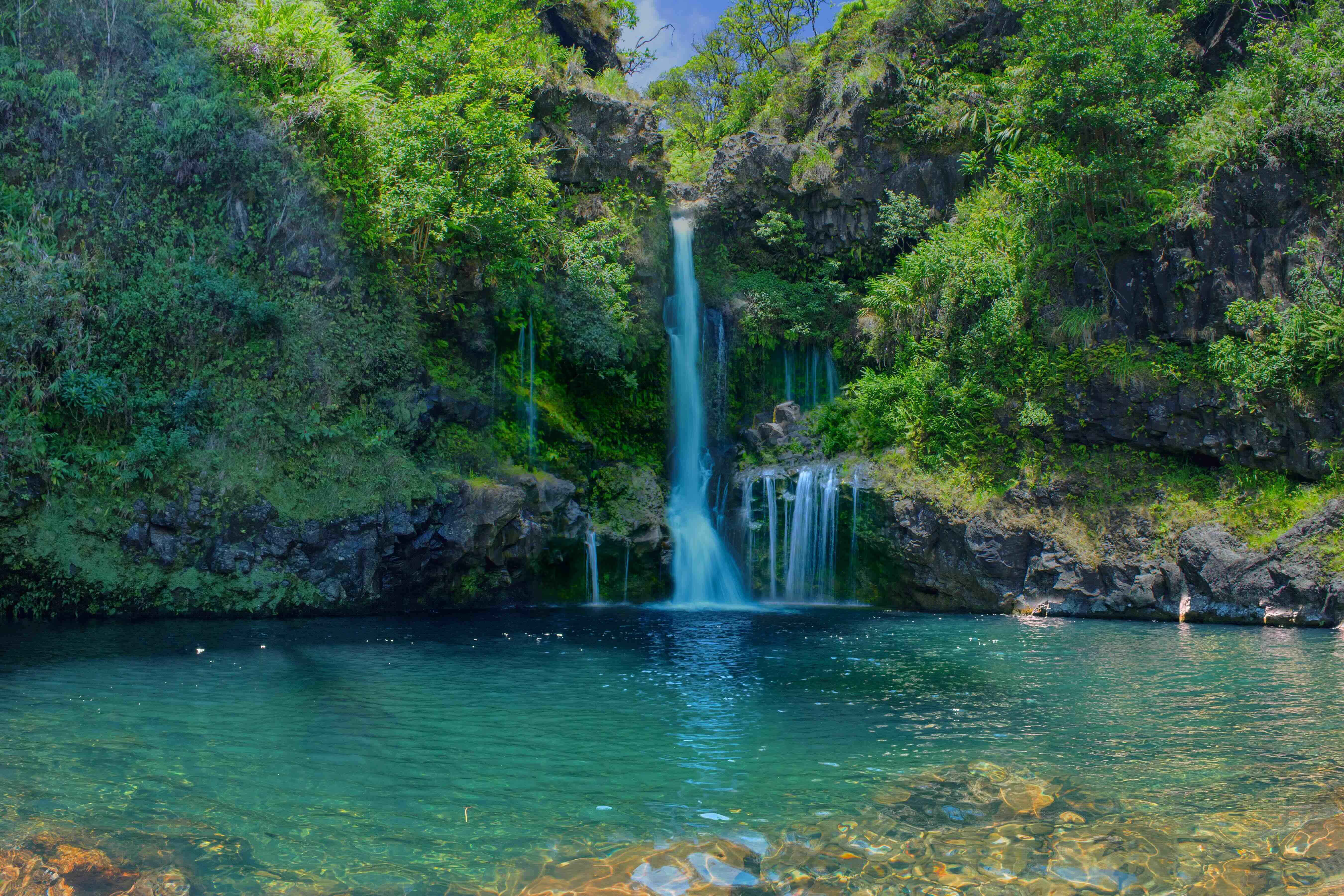
Waterfalls run on rain. The same fall can be a trickle one week and this the next. Photo: Hawaii Tourism Authority (HTA)
- Heavy rain raises flash-flood risk and can make stream crossings dangerous.
- Rain upstream is what matters, not the weather where you are standing.
- Never enter a stream because other visitors are doing it.
- The payoff is real anyway — East Maui's falls are worth planning a day around.
Almost all of this is East Maui and the Hāna Highway, which means one long day rather than a stop you slot into another one.
Pīpīwai and Waimoku
The signature waterfall hike on Maui, and the only one on this page that costs money to reach.
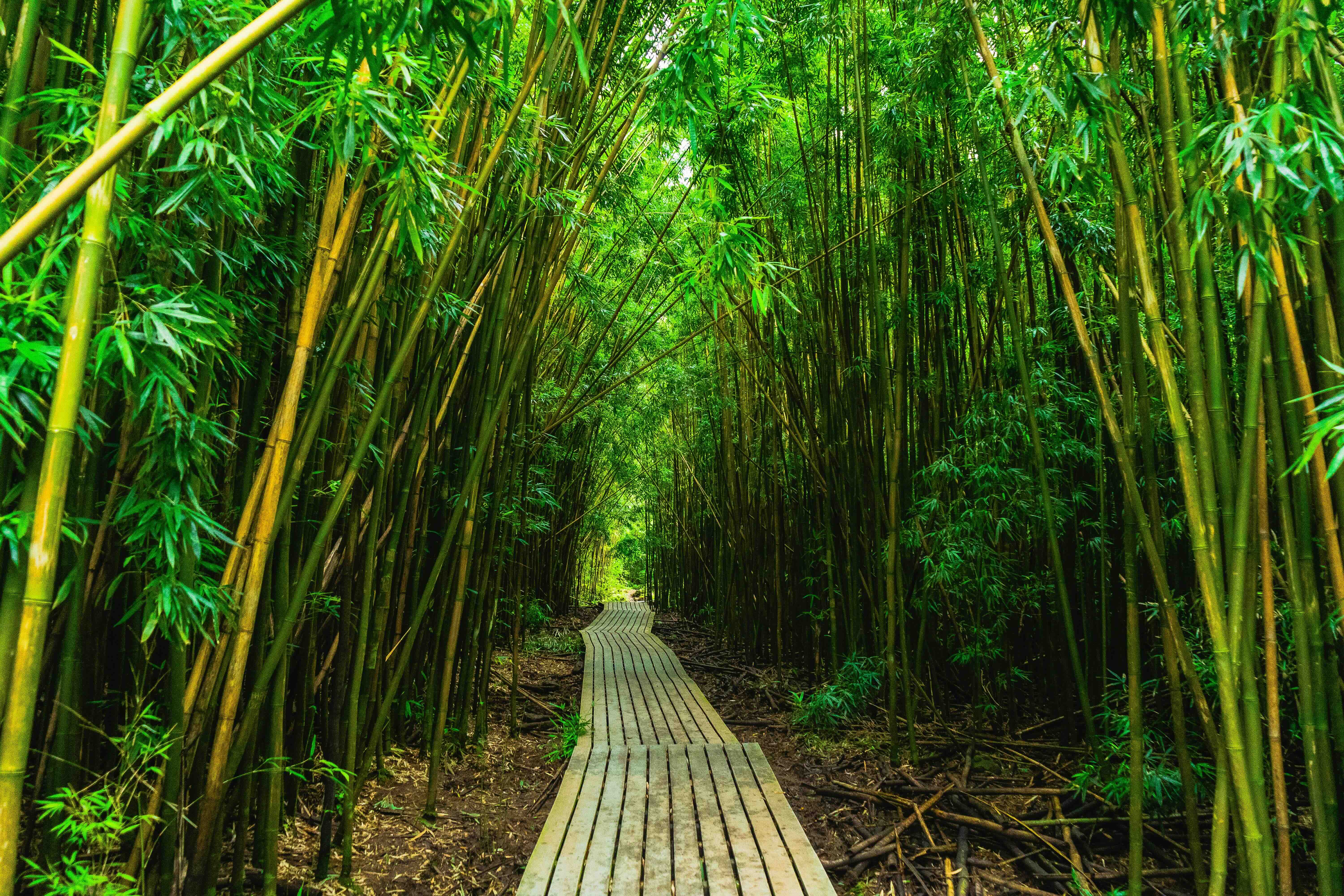
The bamboo section is the part of the Pīpīwai Trail people remember, and it comes before the falls.
- Where — the Kīpahulu district of Haleakalā National Park, on the far side of Hāna.
- Entrance fee — $30 per private vehicle, $25 per motorcycle or $15 per person on foot or bicycle, each valid three days and each covering both the Summit and Kīpahulu districts. Children under 16 are free.
- Reservations — the park requires an advance reservation for anyone entering for sunrise. It publishes no reservation requirement for daytime entry to Kīpahulu.
- The trail — the Pīpīwai Trail is 4 miles round trip with 800 ft of elevation change, which the park calls moderately strenuous.
- What you pass — the Makahiku Overlook at half a mile, the bamboo forest about a mile in, and the Waimoku Falls viewing area at the end of two miles.
- Swimming — the Pools of ʻOheʻo are closed to entry, and the park says swimming is not recommended in ʻOheʻo Gulch because of flash floods and rock slides.
One pass covers the summit too, and it lasts three days, which is the useful part: we would not attempt the summit and Kīpahulu on the same day, and the three-day pass means you do not have to.
Puaʻa Kaʻa
The easy one — a roadside state wayside with small falls, pools and a place to stop.
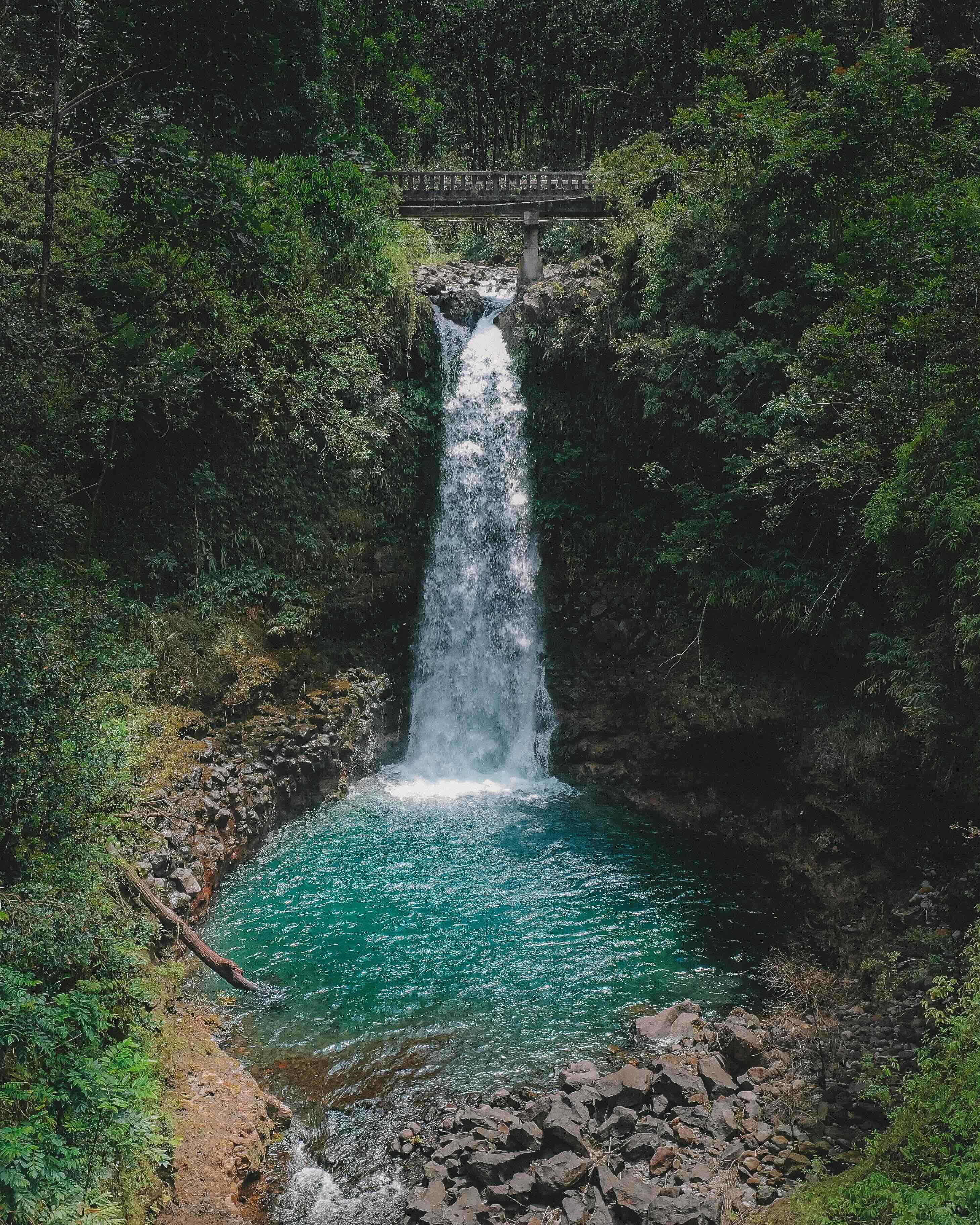
Puaʻa Kaʻa State Wayside, East Maui. Photo: Hawaii Tourism Authority (HTA)
- Open daily during daylight hours, per the state.
- No entry fee, for residents or visitors.
- Restrooms are there — the state repainted and repaired them in a 2025 improvements project.
- Five acres, about 39 miles east of Kahului on the Hāna Highway at around 1,200 ft.
The Division of State Parks describes it as a rest stop and picnic area in rainforest, which is exactly the right expectation. Puaʻa Kaʻa is the waterfall stop that asks nothing of you.
Twin Falls
The first waterfall on the Hāna Highway, and the one with a gate and a schedule.
- Gates open 7:10 a.m., last entry 4:30 p.m., and everyone out by 5:00 p.m.
- Closed to visitors the first Saturday of every month — that day is reserved for Hawaiʻi residents, with a valid Hawaiʻi driver's licence required for every adult.
- Open daily otherwise, though the farm notes hours can vary with weather and staffing.
- The upper falls is over a mile round trip through riverbeds and slippery trail, and the farm itself warns about flash flooding on it.
Check the date before you drive out, because the first Saturday is a closed gate rather than a quiet morning. Twin Falls is worth a stop if it fits the day, but there is a lot of Hāna Highway ahead of it.
Flash Flooding
This is the subject of the page, not a footnote on it.
- Water can rise as fast as four feet in ten minutes, which the National Park Service states plainly alongside the outcome: people washed out to sea and drowned.
- Rock falls happen in gulches and below waterfalls, which is exactly where people stand for photographs.
- Rocks are slippery and the tripping hazards the park lists are overlooks, ledges, jumping and diving.
- The water carries Leptospirosis and E. coli, which is a reason to keep cuts out of it and your head above it.
- Rain you cannot see counts — the stream rises from rainfall upstream, not from the sky above the pool.
If the water starts to rise or go brown, get out and get up, and do not cross back. The park's own safety page is the one to read before an East Maui waterfall day.
Practical Tips
Never enter a stream in heavy rain or a flash-flood watch. Water can rise four feet in ten minutes and it does not warn you first.
Check the date before driving to Twin Falls. It is closed to visitors on the first Saturday of every month.
Buy the park pass once and use it twice. It is $30 a vehicle, valid three days, and it covers the summit as well as Kīpahulu.
Park only in legal areas on the Hāna Highway. The shoulder is narrow and the blind corners are the reason people get hit.
Respect private property and posted signs. A waterfall being visible from the road does not make the land in front of it public.
Frequently Asked Questions
Can you swim under Maui waterfalls?
Not at the famous one. The Pools of ʻOheʻo in Haleakalā National Park are closed to entry, and the park says swimming is not recommended in ʻOheʻo Gulch because of flash floods and rock slides. Elsewhere, conditions change fast and no pool is reliably safe.
Which waterfall is best with kids?
Puaʻa Kaʻa State Wayside. It is free, open daily during daylight hours, has restrooms and asks for no hike at all.
What is the biggest waterfall hike?
The Pīpīwai Trail to Waimoku Falls — 4 miles round trip with 800 ft of elevation change, through the bamboo forest, in the Kīpahulu district.
How much does it cost to see Waimoku Falls?
$30 per private vehicle, $25 per motorcycle or $15 per person on foot, each valid three days and each covering both the Summit and Kīpahulu districts.
Is Twin Falls closed?
No. It is open daily, but it is closed to visitors on the first Saturday of every month, which is reserved for Hawaiʻi residents.
Which region of Maui has the waterfalls?
East Maui, along the Hāna Highway and beyond Hāna in Kīpahulu. There is no waterfall day in South or West Maui.