Where to Stay on Maui: Best Areas Explained
Quick answer
- Most first-time visitors should choose South or West Maui: Kīhei for value, Wailea for luxury, Kāʻanapali for walkability, Nāpili for a smaller beach stay and Kapalua for quiet.
- South Maui is better positioned if exploring the island is a major priority.
- For a week or less, choose one base and stay there.


At a Glance
Start With South Maui vs. West Maui
This is the decision most first-time visitors should make first.
Already know the area? See every resort and condo we name, by area.
- Best for flexibility + exploring — South Maui. Great beaches, a more relaxed feel and easier access to the rest of Maui.
- Best for a classic resort vacation — West Maui. Kāʻanapali, Nāpili and Kapalua put more of the vacation along one oceanfront coast.
Both have excellent beaches.
Both have great snorkeling.
Both have luxury resorts, restaurants and beautiful sunsets.
The bigger difference is vibe and geography.
South Maui feels more spread out, subtle and relaxed. It also puts you in a better position for exploring other parts of the island.
West Maui gives you more of the classic Maui resort-coast experience, particularly around Kāʻanapali, where the beach, pools, restaurants and shopping can all become part of the same walkable vacation.
Neither is better.
The question is which one sounds more like your trip.
Where you stay decides how much you drive. See Getting Around Maui and Do You Need a Rental Car on Maui?
South Maui
Best for beaches, flexibility and easier access to the rest of Maui.
- Best condo base — Kīhei. Condos, families, value and a casual Maui stay.
- Best resort base — Wailea. Luxury resorts, couples and families who want the resort to be part of the vacation.
- Best for quiet + beaches — Mākena. Less development and a more natural South Maui feel.
Where: Kīhei through Wailea and Mākena.
South Maui runs from Kīhei through Wailea and into Mākena, and the feel changes considerably as you move south.
One of its biggest advantages is location.
North Shore and Upcountry can become a half-day adventure rather than an entire day away. Māʻalaea is close for boat trips. Haleakalā and the beginning of the Road to Hāna are easier to reach than they are from West Maui.
If you're someone who wants great beach days but also wants to explore, South Maui is hard to beat.
Kīhei
Kīhei is the practical choice.
You'll find condos with kitchens and laundry, grocery stores, coffee shops, casual restaurants and a long stretch of beaches.
The Kamaʻole beaches make it particularly easy for families, while Wailea and Mākena are just down the road when you want a different beach or a nicer dinner.
Kīhei isn't a polished resort bubble.
That's part of the appeal.
Wailea
Wailea is South Maui's resort center.
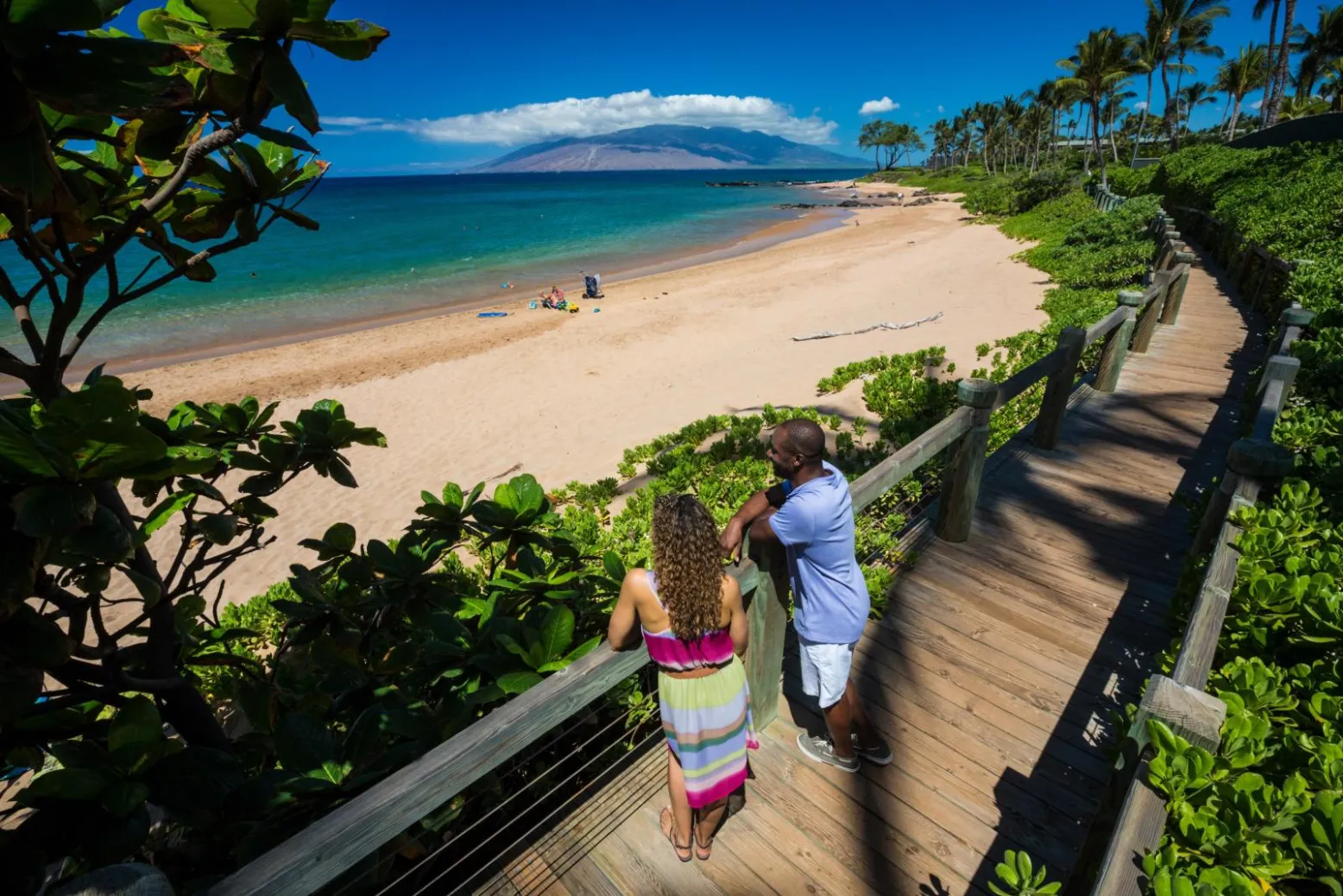
Mōkapu Beach, Wailea. Photo: Hawaii Tourism Authority (HTA)
You get beautiful beaches, excellent pools, spas, golf and restaurants, with the Wailea Beach Path connecting much of the coastline.
For couples and honeymoons, Wailea is one of our favorite places on Maui.
For families, the resorts make everything easy, and Grand Wailea is our favorite Maui resort for kids because the pool complex becomes an activity of its own.
Wailea also gives you something we like about South Maui generally: you can have the resort vacation without being far from everything else.
Mākena
Keep driving south from Wailea and Maui starts feeling very different.
The resorts and shopping thin out, the coastline becomes more natural and beaches like Maluaka and Big Beach become the attraction.
Mākena is a great choice if quiet is exactly what you're looking for.
The tradeoff is convenience. There are relatively few restaurants and shops, so you'll head back toward Wailea or Kīhei for most meals and errands.
West Maui
Best for the classic Maui resort vacation.
- Best for resort convenience — Kāʻanapali Beach. The full resort experience and doing more without driving.
- Best for a smaller beach stay — Nāpili. A more intimate, less resort-heavy West Maui experience.
- Best for quiet luxury — Kapalua. Couples, golf, scenery and a more relaxed resort atmosphere.
Where: Kāʻanapali through Nāpili and Kapalua.
West Maui feels different from South Maui.
Kāʻanapali has one of the island's strongest concentrations of beachfront resorts, restaurants, shopping and activities. Continue north and the atmosphere gradually changes: Nāpili becomes smaller and more intimate, while Kapalua becomes greener, quieter and more secluded.
If you want to arrive at your resort and have less reason to get back in the car, West Maui has a major advantage.
Kāʻanapali Beach
This is classic Maui.
A long beach, major resorts, pools, restaurants, Whalers Village, the beachwalk, snorkeling and boat activities are concentrated in one area.
You can wake up, walk to breakfast, spend the morning at the beach, go to the pool, have dinner and watch sunset without touching the car.
For families and first-time visitors who want an easy resort vacation, Kāʻanapali makes a lot of sense.
The tradeoff is that it feels busier and more resort-oriented than much of South Maui.
Nāpili
Nāpili is one of our favorite alternatives to the larger resort areas.
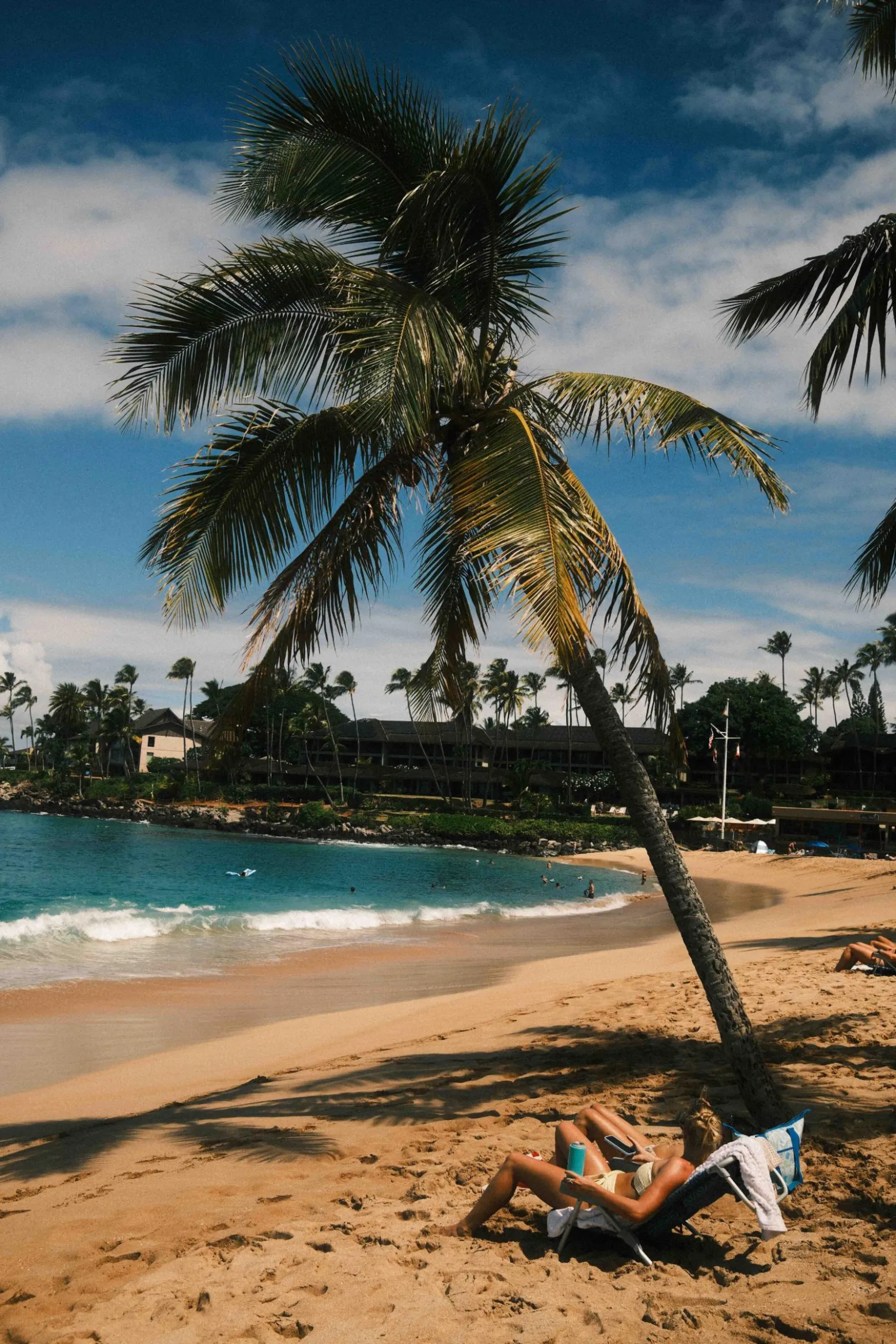
Nāpili Bay, West Maui. Photo: Hawaii Tourism Authority (HTA)
Nāpili Bay is a beautiful crescent beach and one of Maui's more naturally sheltered bays during normal trade-wind conditions.
The area feels smaller and quieter than Kāʻanapali without being as removed as Kapalua.
It's particularly appealing for couples, families and repeat visitors who care more about a beautiful bay than a giant resort complex.
Kapalua
Kapalua is the quietest of West Maui's major resort areas.
It's greener, more spacious and more relaxed, with golf, coastal walks and beautiful beaches.
Kapalua Bay is another of Maui's most naturally protected bays during normal trade winds, while the Ritz-Carlton area has one of the most relaxed major-resort settings on the island.
The tradeoff is weather. Kapalua is generally breezier and wetter than Kāʻanapali and South Maui.
If you want nightlife and constant activity, stay elsewhere.
If you want quiet luxury and don't mind slowing down, Kapalua is difficult to beat.
What About the Beaches?
Don't choose South vs. West based on which side has “better” beaches.
Both are excellent.
South Maui gives you tremendous variety close together: Kamaʻole, Keawakapu, Ulua, Mōkapu, Wailea, Polo, Maluaka and Big Beach all offer something different.
West Maui gives you the long resort beach at Kāʻanapali plus something South Maui doesn't quite replicate: the beautiful protected coves of Nāpili and Kapalua.
Choose the region for the overall vacation.
Then find the beach that fits the day.
North Shore & Pāʻia
Best for surf culture, character and travelers who don't need a resort vacation.
Pāʻia gives you restaurants, shops and easy access to Hoʻokipa, North Shore beaches, Upcountry and the Road to Hāna.
It feels completely different from Wailea or Kāʻanapali.
That's exactly why some travelers love it.
But the North Shore is generally windier, the ocean can be rougher and you won't have the same collection of calm resort beaches.
For most first-time visitors looking for the classic Maui beach vacation, we'd still stay South or West and visit the North Shore for the day.
Upcountry
Best for cooler weather, space and a completely different Maui experience.
Makawao and Kula trade the beach for farms, ranchland, mountain views, cooler temperatures and a quieter pace.

Open pasture, Upcountry
Upcountry can be wonderful for couples, repeat visitors and anyone looking for something less conventional.
It also puts you closer to Haleakalā.
But if you're imagining yourself swimming every morning and walking to the beach at sunset, don't stay Upcountry simply because it looks centrally located on a map.
You'll spend much more time driving to the coast.
For most visitors, we prefer visiting Upcountry from South Maui rather than using it as the primary home base.
Hāna
Best for slowing down and experiencing East Maui rather than driving through it.
Hāna is the one place where a split stay can really change the experience.
Spending a night or two allows you to experience East Maui without trying to complete the Road to Hāna, see Hāna, visit Kīpahulu and drive all the way back in a single day.
You can explore more slowly, spend time around Hāna and give the Pīpīwai Trail and Kīpahulu the time they deserve.
But Hāna is intentionally remote.
Stay there because you want the isolation and slower pace, not because it's a convenient base for exploring Maui.
Should You Split Your Stay?
Usually you shouldn't split your stay on a one-week trip.
Moving hotels costs more time than people expect.
You pack, check out, load the car, wait for the next room and unpack again.
For seven nights, we'd generally choose one home base in South or West Maui and explore from there.
A split stay makes more sense when:
You're staying longer.
You specifically want a night or two in Hāna.
You genuinely want two different vacation experiences.
We wouldn't split South Maui and West Maui simply because you're afraid of choosing the wrong one.
Pick the one that fits you better and settle in.
Which Area Would We Choose?
We'd choose Kīhei if you want condos, casual restaurants and convenience.
Want luxury resorts with easy access to the rest of Maui?
→ Wailea
Want quiet South Maui and less development?
→ Mākena
Want the classic walkable Maui resort vacation?
→ Kāʻanapali
Want a smaller beach community and beautiful protected bay?
→ Nāpili
Want quiet luxury, golf and scenery?
→ Kapalua
Want surf-town character instead of resorts?
→ Pāʻia / North Shore
Want farms, cooler weather and a mountain setting?
→ Upcountry
Want to disappear into East Maui for a couple of days?
→ Hāna
What About Lāhainā?
Lāhainā remains in recovery from the August 2023 wildfire.

Front Street, Lāhainā. Photo: MauiBookIt
Parts of the road network have reopened as rebuilding continues, but reopening a street is not the same thing as the historic town returning as a visitor destination.
If you're staying in West Maui, follow current local guidance, respect closures and private property, and don't treat the fire-affected areas as a sightseeing stop.
Practical Tips
For a first trip of about a week, choose one home base.
South Maui is better positioned if exploring the island is a major priority.
Kāʻanapali is one of the easiest choices if you want to drive less once you arrive.
Don't choose a region based solely on one sightseeing day.
Compare the full cost of condos and resorts, including parking and resort fees.
Consider Hāna for a split stay; don't split South and West just to experience both.
Most importantly, choose based on how you want an ordinary vacation day to feel.
One Last Tip
Imagine you wake up tomorrow with absolutely nothing planned.
Would you rather walk out to a Wailea resort pool, grab coffee in Kīhei and find a South Maui beach?
Walk the Kāʻanapali beach path without getting in the car?
Spend the morning inside Nāpili Bay?
Or wake up somewhere quiet in Kapalua?
Choose the place where you'd most enjoy doing nothing. That's usually where you should stay.




































Frequently Asked Questions
Which side of Maui has better weather?
South Maui is generally the sunnier and drier resort side. West Maui also gets plenty of sun, while Kapalua and the northwestern end can be greener and wetter.
Where should families stay?
Kīhei is excellent for condo families; Wailea and Kāʻanapali are easy full-service resort choices; Nāpili is great for families wanting a smaller-scale feel.
Where should honeymooners stay?
Wailea and Kapalua are our easiest luxury recommendations. Nāpili can be more intimate; Kīhei works for couples prioritizing value and experiences.
Should I stay in Hāna?
Yes if you want to slow the East Maui portion of the trip down. No if you dislike moving hotels or only have a short stay.
Should I stay near the airport in Kahului?
Not as a base for your trip — Central Maui is the island's commercial and residential hub, not a beach destination. It can be worth a single night for a very late arrival or a pre-dawn departure. Otherwise the drive is short enough that it is not worth trading beach time for: Kīhei is 30 minutes from OGG, Wailea 40, Kāʻanapali 50.
Should I stay in Māʻalaea?
Stay in Māʻalaea if you want quiet oceanfront condo living, easy access to the harbour and no need to be in a beach-town scene. It suits couples, repeat visitors, whale-season trips and anyone with several harbour activities booked. Skip it on a first visit, or if your days revolve around easy swimming beaches or walking to restaurants and bars — Kīhei and Wailea are better for that. Haycraft gives Māʻalaea a real beach, so what you trade away is variety, not sand: Kīhei lets you change plans without getting in the car. Māʻalaea is strategically located for exploring Maui, but it isn't a substitute for staying in the area where you expect to spend most of your time.
Is Māʻalaea too windy?
It is genuinely windy, and that is worth knowing before you book rather than after. The isthmus between Haleakalā and the West Maui Mountains funnels the trades straight through, which is why Maui County's 2025 Hazard Mitigation Plan names Māʻalaea and North Kīhei specifically and puts trade winds at 85–95% of the time from May through September. It is not disqualifying: most of the condo buildings face south, which blocks the worst of it, and for the right traveler the harbour views, the quieter setting and the boat access outweigh it. But if you are choosing Māʻalaea because it looks like the midpoint of the island, understand the trade first.