Best Beaches in West Maui

At a Glance
Most popular on Maui
 Central Maui
Maui Snorkeling Adventure to Molokini and Turtle Town
Visit Maui's famous snorkeling and diving destinations Molokini Crater and Turtle Town on a snorkeling catamaran, with visibility of 100 feet or more.
 South Maui
Feast at Mokapu Luau in Wailea
Discover Hawai'i's most authentic luxury luau at Andaz Maui at Wailea Resort — a curated cultural evening with a three-course plated dinner on Mokapu beach.
 South Maui
Gilligans' Island Luau in Kihei
An intimate luau experience and the only luau in Kihei — less than a quarter the size of the average Maui luau, so every seat has a great view of the show.
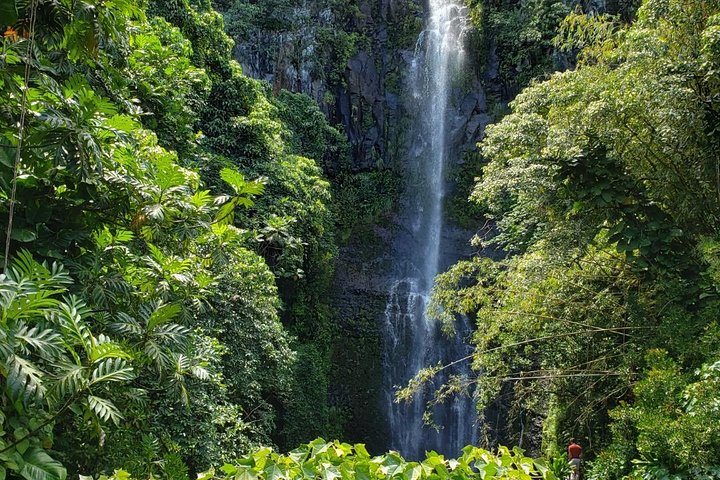 Road to Hāna
Small-Group Road to Hana Adventure Tour with Pickup & Lunch
Watch the waterfalls, black-sand beaches and rainforest go by without anyone in your group behind the wheel.
 Upcountry
Majestic Haleakalā Sunrise Tour with Pick-up
Ride to the summit for sunrise above the clouds, then unwind over a hot breakfast on the way back down.
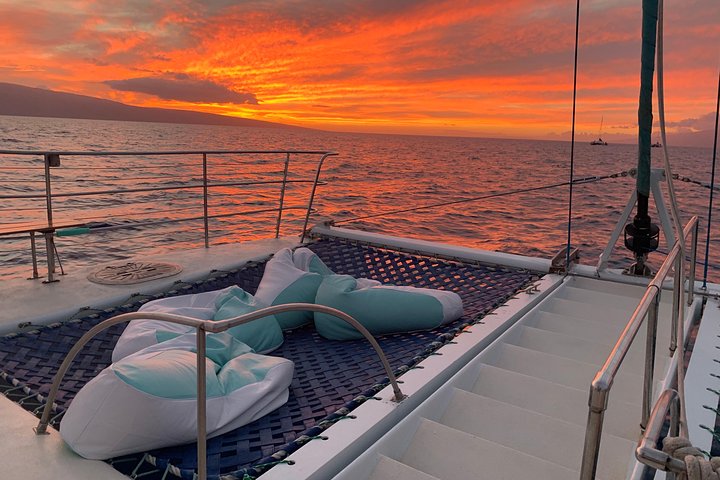 West Maui
Original Sunset Cruise with Open Bar from Kaʻanapali
Sip an unlimited open bar while the sun drops behind Lānaʻi, with pupus and live music twice a week.
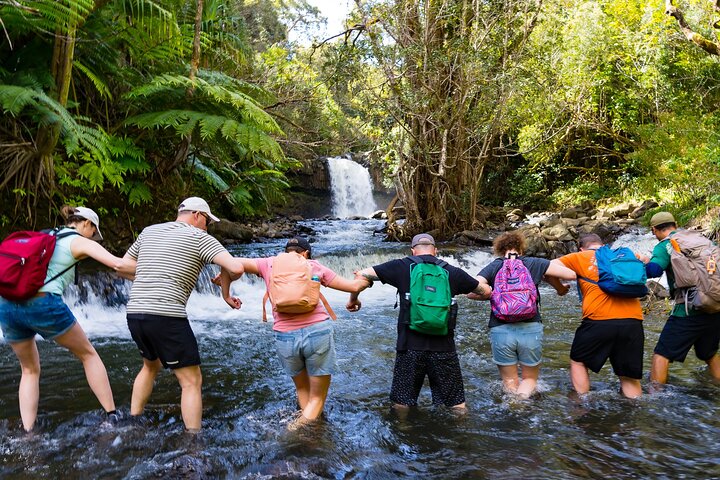 Central Maui
Small Group Waterfall and Rainforest Hiking Adventure
A guided rainforest hike to East Maui waterfalls, with time to swim beneath the falls and a trail lunch included.
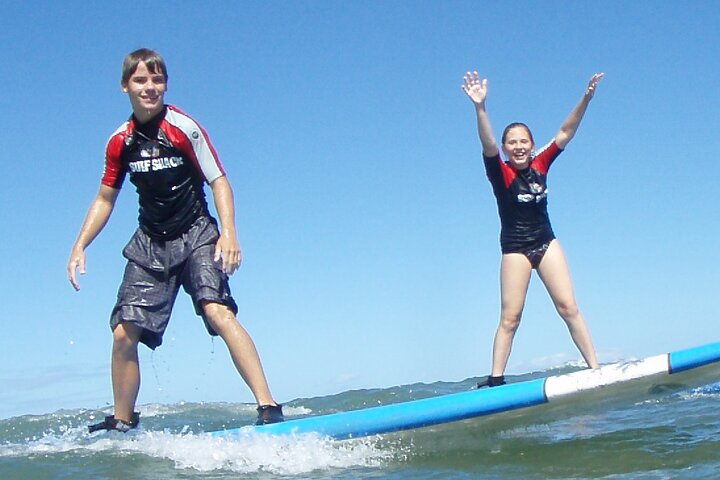 South Maui
Two Hour Beginner Group Surf Lesson in Kihei
A two-hour beginner lesson in calm South Maui water — board, gear and instruction all included.
 Upcountry
Maui Pineapple Farm Tour in Haliimaile
Tour a working pineapple farm and packing house upcountry, with tastings and a fresh pineapple to take home.
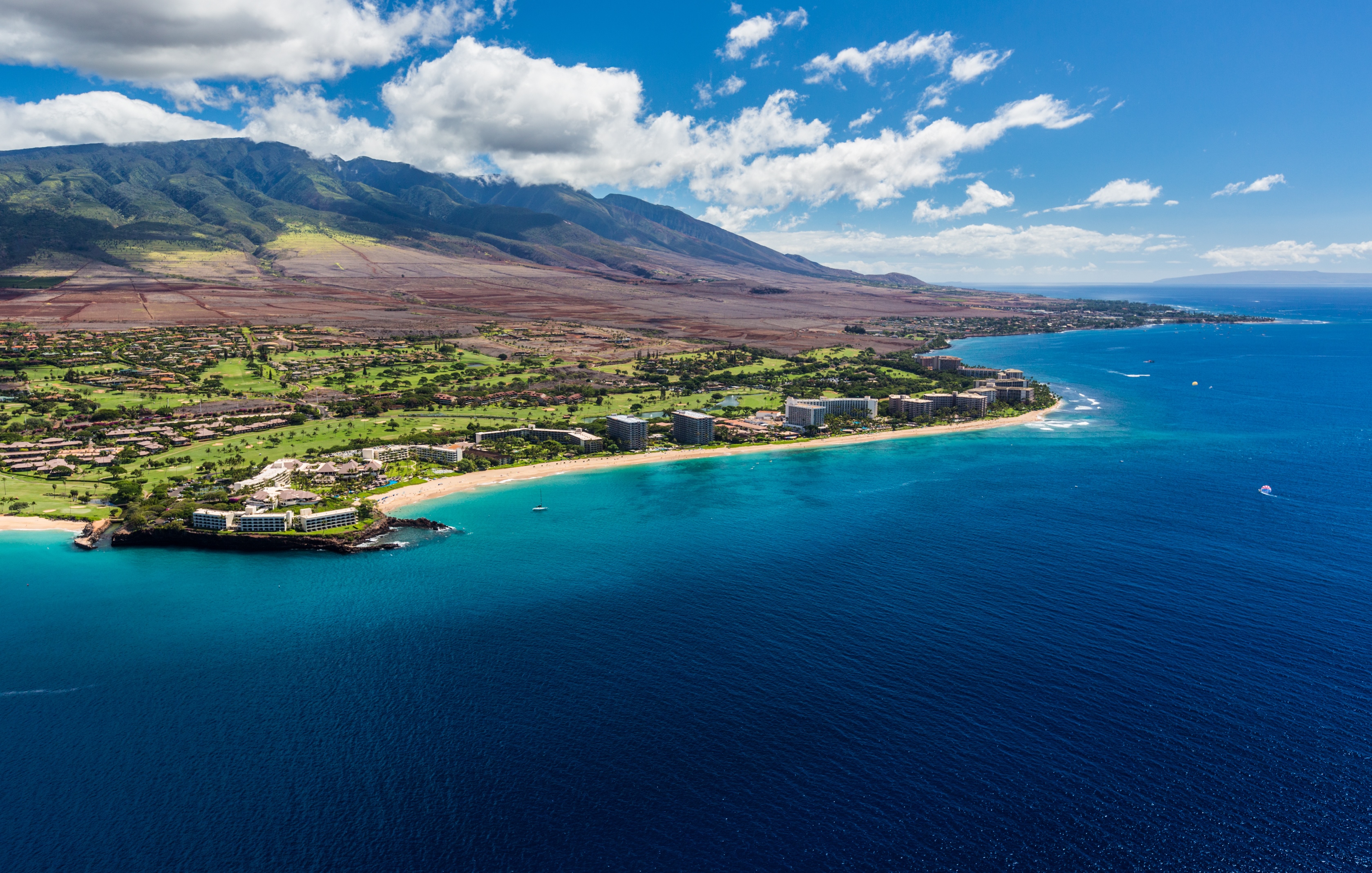
Kāʻanapali: The Resort Coast
If you’re staying in Kāʻanapali, this is one of the easiest places on Maui to build an entire day around the beach.
- Best all-around — Kahekili (airport beach)
- Best snorkeling — Kahekili (airport beach)
- Most convenient — the beach directly in front of your resort
- Best for restaurants + shopping — Kāʻanapali Beach
- Best lifeguarded option — Hanakaʻōʻō Beach Park (Canoe Beach)
Where: the Kāʻanapali resort coastline north of Lāhainā, from Hanakaʻōʻō through the main resort beach and Black Rock to Kahekili (airport beach).
Kāʻanapali is less about finding one perfect beach and more about choosing the part of the coastline that fits your day.
If you’re staying at one of the beachfront resorts, the easiest beach is usually the one directly in front of you. You can walk out of the hotel, swim, grab lunch, hit the pool, shop and be back on the sand without ever getting in a car.
If snorkeling is the priority, we’d head to Kahekili (airport beach). If you want the classic resort-beach experience with restaurants and shopping close by, stay along the main Kāʻanapali stretch.
Morning is usually the best time for the water before afternoon wind and chop build.
Kāʻanapali Beach
The classic West Maui resort beach — and the easiest choice if you’re staying on it.
The main resort stretch is long, beautiful and backed by the paved Kāʻanapali Beachwalk, so resorts, restaurants, bathrooms and shopping at Whalers Village are all close by.
It’s one of the easiest beaches on Maui to turn into a full day. Swim in the morning, grab lunch, shop, head to the pool and come back for sunset without moving the car.
For snorkeling, though, we prefer Kahekili (airport beach).
There is no lifeguard tower along the main resort stretch itself, so always pay attention to posted warnings and the conditions in front of you.
Kahekili (airport beach)
Our favorite all-around beach in Kāʻanapali — especially if snorkeling is part of the plan.
Kahekili sits along the northern end of the broader Kāʻanapali coastline and combines a good beach with some of the easiest reef access on this side of Maui.
The reef starts close to shore, making this our favorite snorkeling beach in Kāʻanapali. You don’t have to swim far before you’re over coral and fish, and the sandy entry makes it approachable for a wide range of swimmers when conditions are calm.
It also has the advantage of being a real beach park with parking, restrooms and showers, so you can snorkel, swim, rinse off and stay for a few hours without relying on a resort.
Go early. The water is usually calmer, parking is easier and visibility tends to be better before the afternoon wind arrives.
There is no lifeguard.
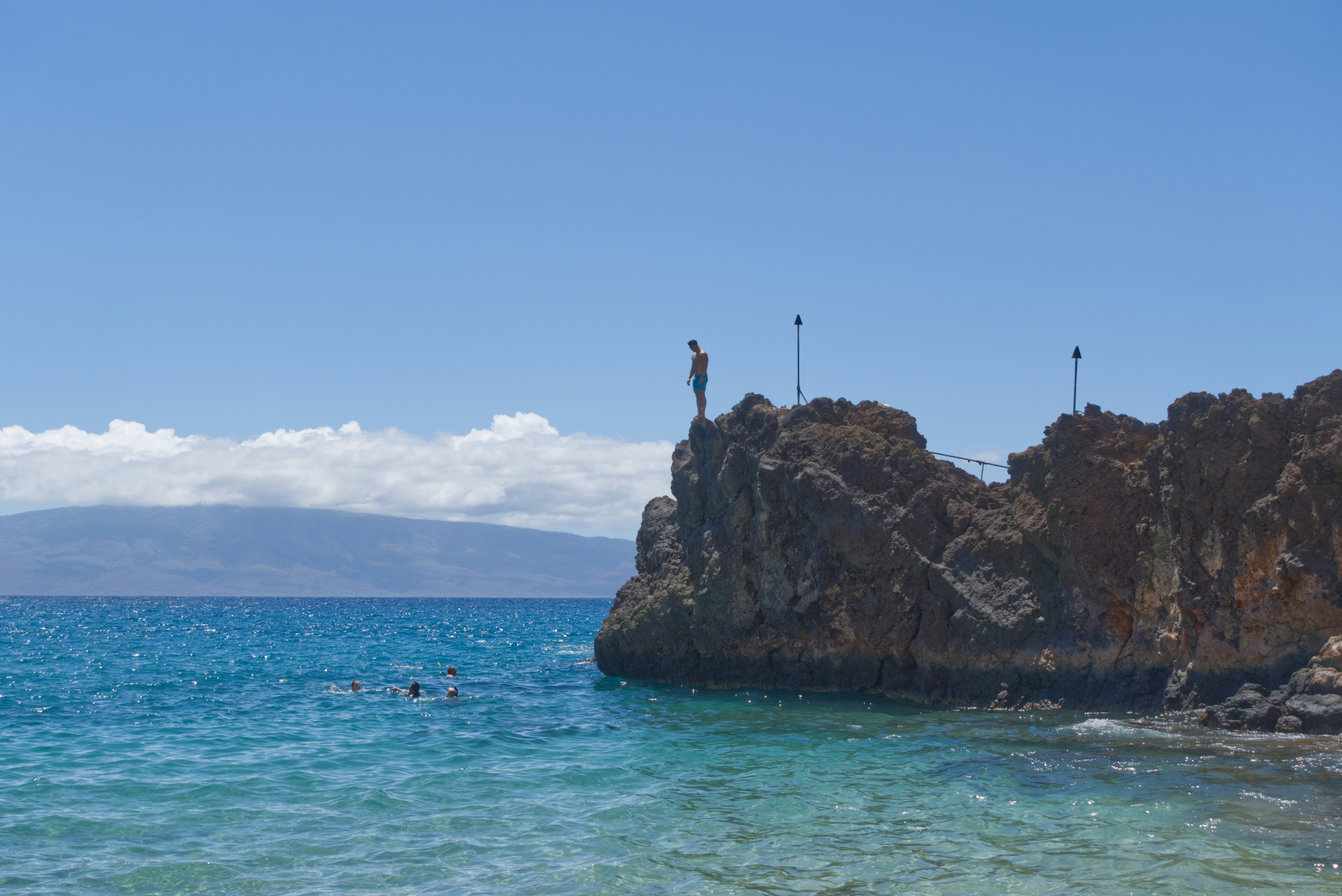
Puʻu Kekaʻa (Black Rock)
An iconic Kāʻanapali landmark and a convenient snorkel if you’re already staying nearby.
Black Rock sits at the north end of the main resort beach in front of the Sheraton.
There is reef around the point and plenty of fish when conditions are good, but the area can get crowded with swimmers, snorkelers and cliff jumpers. Current can also move around the point when swell is running.
If you’re already staying nearby, it’s an easy place to explore.
If you’re choosing a beach specifically to snorkel, we’d go to Kahekili (airport beach) instead.
Hanakaʻōʻō Beach Park (Canoe Beach)
A useful lifeguarded beach park — but usually unnecessary if you’re already staying at a beachfront Kāʻanapali resort.
Hanakaʻōʻō sits at the southern end of the Kāʻanapali coastline and has a lifeguard, parking, restrooms and outdoor showers.
It makes sense if you’re driving in for the day or specifically want a lifeguarded beach.
But if your resort already sits directly on Kāʻanapali Beach, there’s usually no reason to leave your beach just to come here. The convenience of walking straight from your room to the sand is hard to beat.
Nāpili + Kapalua: Quieter West Maui
Nāpili and Kapalua feel quieter and more residential than Kāʻanapali, but their most popular bays can still get very busy.
- Best relaxed beach — Nāpili Bay
- Best beginner snorkel — Kapalua Bay
- Best for space + a walk — Oneloa Beach
- Best dramatic beach — D.T. Fleming Beach Park
Where: north of Kāʻanapali through Nāpili and Kapalua.
The farther north you go, the coastline generally becomes greener, quieter and less dominated by large resorts.
But don’t confuse a quieter area with an empty beach. Nāpili Bay and Kapalua Bay are two of West Maui’s most popular beaches and can get crowded quickly.
Winter north swell also affects this end of the island more dramatically. A bay that is calm and easy in summer can look completely different during a winter swell.
Nāpili Bay
One of our favorite West Maui beach mornings when the water is calm.
Nāpili is a beautiful crescent of golden sand surrounded by low-rise condos and smaller properties.
It works equally well for swimming, playing in the water, casual snorkeling around the rocky edges or simply spending a few hours on the beach.
The overall Nāpili area feels relaxed, but the bay itself is popular and can fill quickly.
There is no lifeguard, and shorebreak can become much stronger when a swell is running.
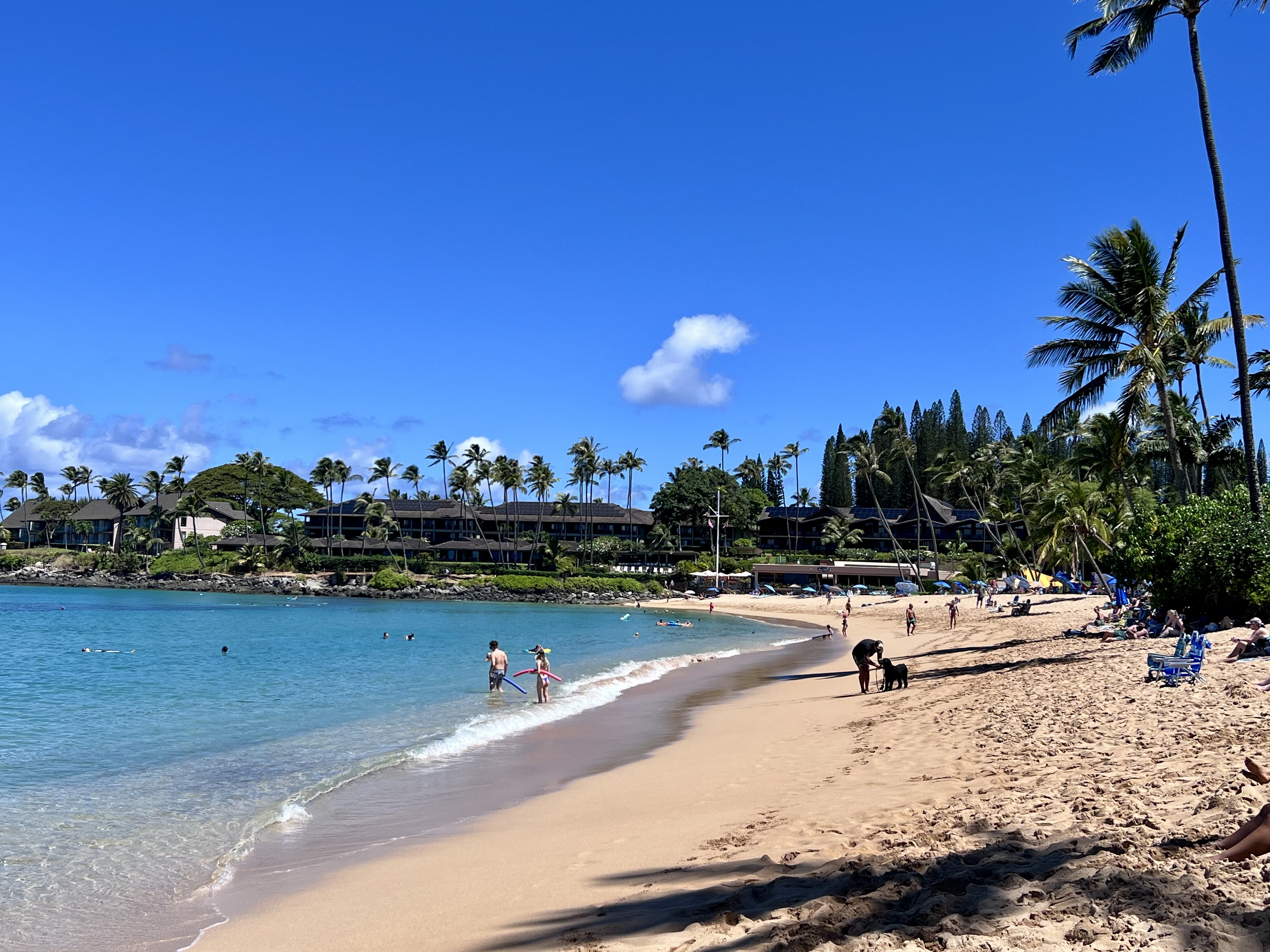
Nāpili Bay, West Maui. Photo: MauiBookIt
Kapalua Bay
Our favorite beginner snorkeling beach in West Maui when conditions are calm.
Kapalua’s protected shape, sandy entry and reef along both rocky sides make it one of Maui’s easiest places to try snorkeling.
On a calm morning, beginners can enter from the middle of the beach and gradually work toward the reef without swimming far offshore.
It’s also a beautiful beach even if you never put on a mask.
The challenge is popularity. Kapalua Bay can get crowded, and parking fills early.
There is no lifeguard, so calm conditions still matter.
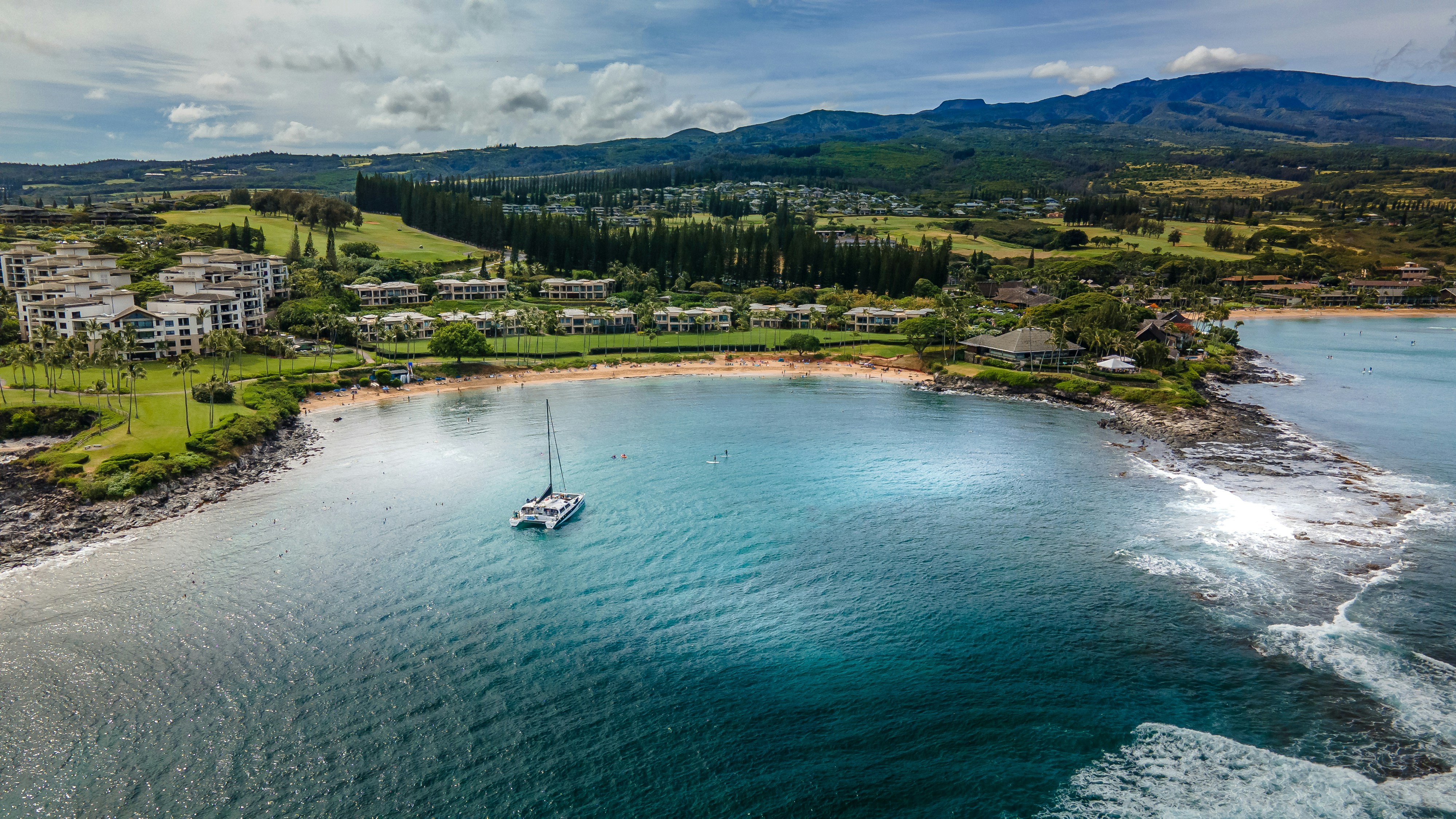
Kapalua Bay, West Maui. Photo: John Bell / Unsplash
Oneloa Beach (Ironwoods)
Our pick when you want space, scenery and a coastal walk instead of a crowded bay.
Oneloa is wide, open and usually much quieter than nearby Nāpili or Kapalua Bay.
The Kapalua Coastal Trail runs along the bluff above it, making this one of our favorite West Maui beaches to combine with a walk.
The tradeoff is the water. Oneloa is more exposed and can have stronger shorebreak, so we think of it more as a beach for walking, scenery and relaxing than an easy swimming beach.
D.T. Fleming Beach Park
Big, beautiful and one of the better-equipped beaches at the north end of West Maui.
D.T. Fleming has a wide stretch of sand, facilities and a lifeguard.
It’s also much more exposed than Kapalua Bay.
Shorebreak can be strong, particularly when north swell is running, so don’t assume the presence of a lifeguard means the water is gentle.
Come for the beach and scenery, then decide whether swimming makes sense once you see the conditions.
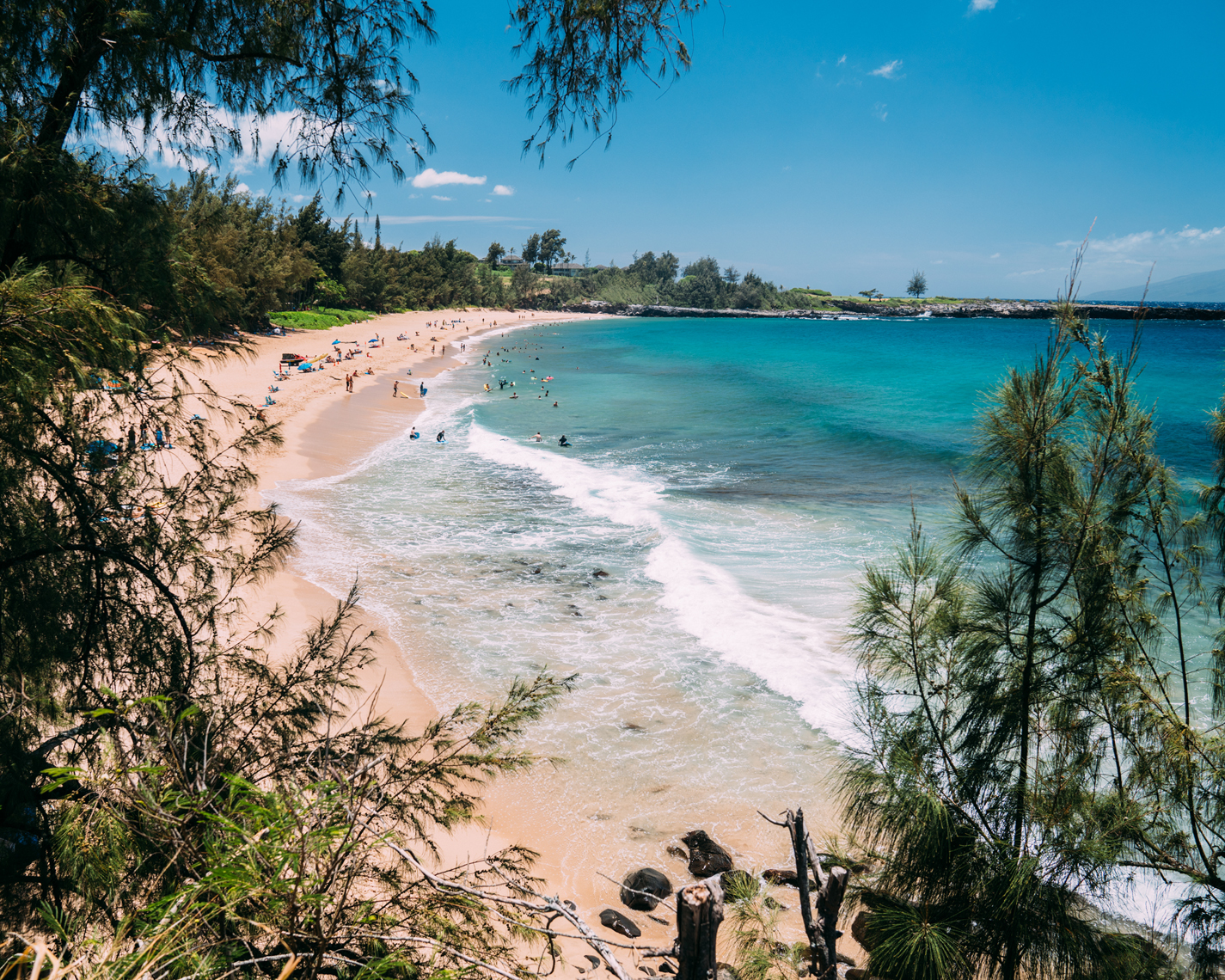
D.T. Fleming Beach, Kapalua. Photo: Hawaii Tourism Authority (HTA)
Honolua Bay: Snorkeling, Not a Beach Day
Honolua is one of West Maui’s best snorkeling reefs when conditions are calm — but it isn’t really a beach.
- Best for — confident snorkelers in calm conditions
- Skip it when — north swell is running
Where: beyond Kapalua along the northwest coast.
Honolua Bay is a protected marine conservation area with a rocky shoreline rather than a sandy beach.
There are no normal beach facilities, and getting into the water takes more effort than at Kapalua or Kahekili (airport beach).
When the bay is flat, the reef can offer some of the best shore snorkeling in West Maui.
When north swell arrives, Honolua becomes a serious surf break instead. If surfers are out or the bay is moving, this is not a snorkeling day.
Think of Honolua as a snorkeling stop in the right conditions, not somewhere we’d send you for a normal family beach day.
Practical Tips
- Go early. Parking is easier and the water is usually calmer.
- Snorkel in the morning. Afternoon trade winds can add chop and reduce visibility.
- Don’t leave a great beach just because another one is ranked higher. If the water looks good in front of your resort, enjoy it.
- Expect crowds at Nāpili and Kapalua Bay. The surrounding areas may feel quiet, but the beaches themselves are popular.
- Watch the north swell in winter. Kapalua, Nāpili, D.T. Fleming and especially Honolua can change dramatically.
- Use a lifeguarded beach when conditions make you uncomfortable.
- Don’t treat Honolua like a family beach. Go for snorkeling when it’s calm or to watch the surf when it isn’t.
- If snorkeling is your priority in Kāʻanapali, start with Kahekili (airport beach).
One Last Tip
The best West Maui beach is usually the one that fits what you want to do that morning.
If the water is calm in front of your resort, stay there. If you want to snorkel, go to Kahekili (airport beach) or Kapalua. If you want space and a walk, head toward Oneloa.
You don’t need to collect every beach on the coast to have a great beach day.
Frequently Asked Questions
Which Kāʻanapali beach should I choose?
If you are staying at one of the beachfront resorts, usually the one directly in front of you — you can swim, grab lunch, hit the pool, shop and be back on the sand without ever getting in a car. If snorkeling is the priority, head to Kahekili (airport beach), where the reef starts close to shore. For the classic resort-beach experience with restaurants and shopping close by, stay along the main Kāʻanapali stretch.
Which West Maui beaches have a lifeguard?
Hanakaʻōʻō Beach Park (Canoe Beach) at the southern end of the Kāʻanapali coastline, and D.T. Fleming Beach Park at the north end. D.T. Fleming is much more exposed than Kapalua Bay and shorebreak can be strong, particularly when north swell is running, so don't assume the presence of a lifeguard means the water is gentle.
Is Oneloa Beach good for swimming?
We think of it more as a beach for walking, scenery and relaxing. Oneloa is wide, open and usually much quieter than nearby Nāpili or Kapalua Bay, with the Kapalua Coastal Trail running along the bluff above it. The tradeoff is the water — it is more exposed and can have stronger shorebreak.
Are Nāpili Bay and Kapalua Bay actually quiet?
The areas feel quieter and more residential than Kāʻanapali, but don't confuse a quieter area with an empty beach. Nāpili Bay and Kapalua Bay are two of West Maui's most popular beaches and can get crowded quickly, and parking at Kapalua fills early. Neither has a lifeguard.
Is Honolua Bay a good beach day?
No. Honolua Bay is a protected marine conservation area with a rocky shoreline rather than a sandy beach, and there are no normal beach facilities. When the bay is flat the reef can offer some of the best shore snorkeling in West Maui; when north swell arrives it becomes a serious surf break instead.
How much does winter north swell change these beaches?
A bay that is calm and easy in summer can look completely different during a winter swell. Kapalua, Nāpili, D.T. Fleming and especially Honolua can all change dramatically. Use a lifeguarded beach when conditions make you uncomfortable.