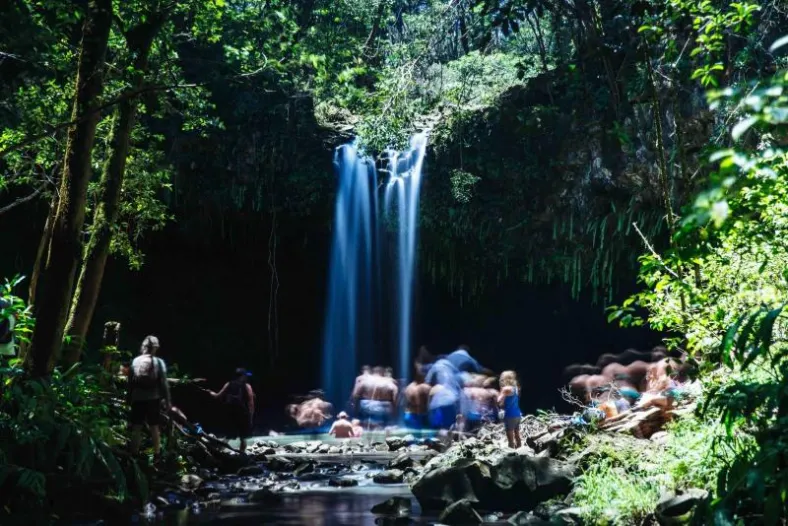
Haleakalā Guide: Sunrise, Sunset and Hiking

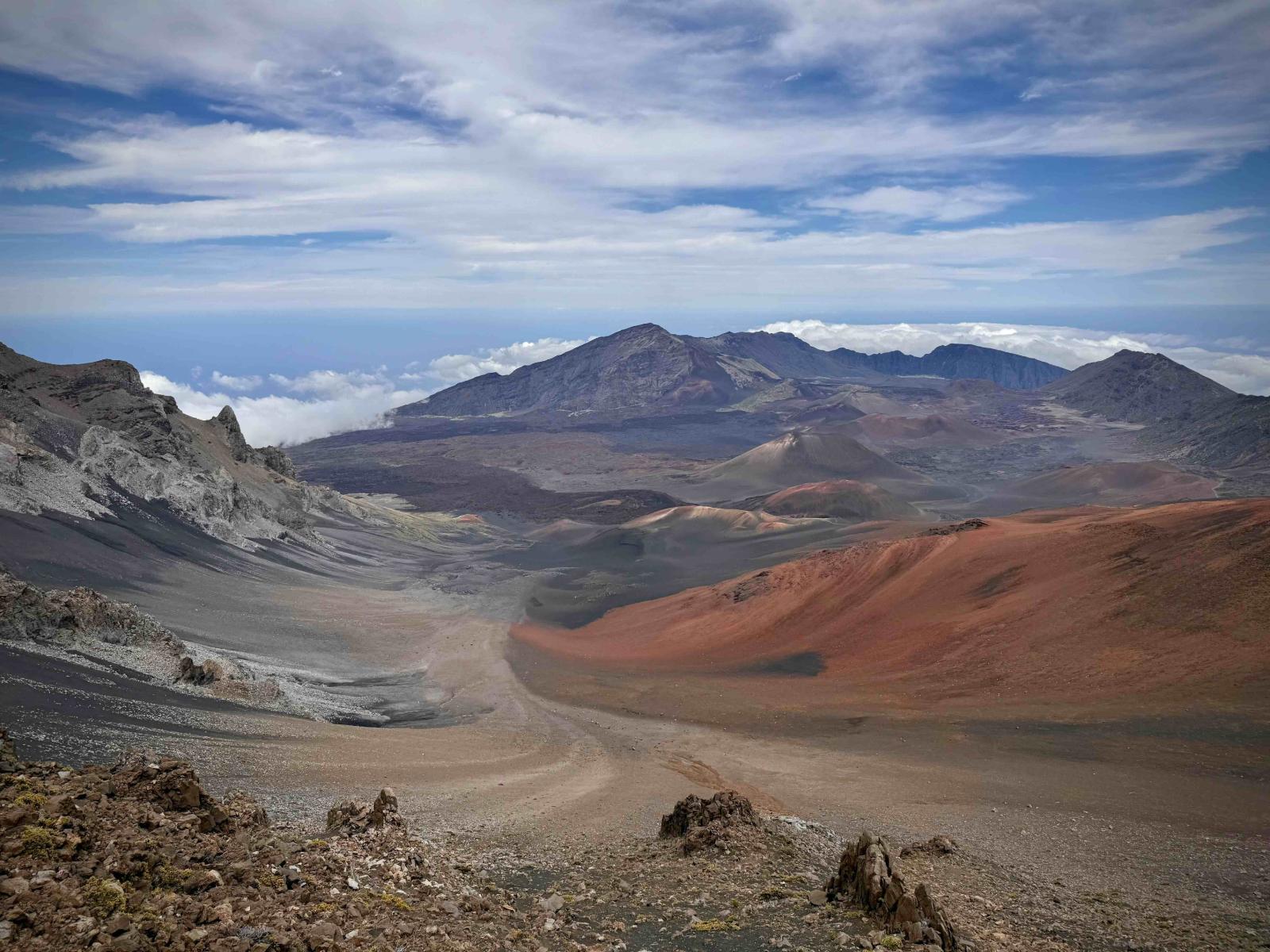
At a Glance
Our pick: Maui: Majestic Haleakala Sunrise Tour with Pick-up
Best for first-time Haleakalā visitors who want pickup, sunrise logistics and breakfast handled.
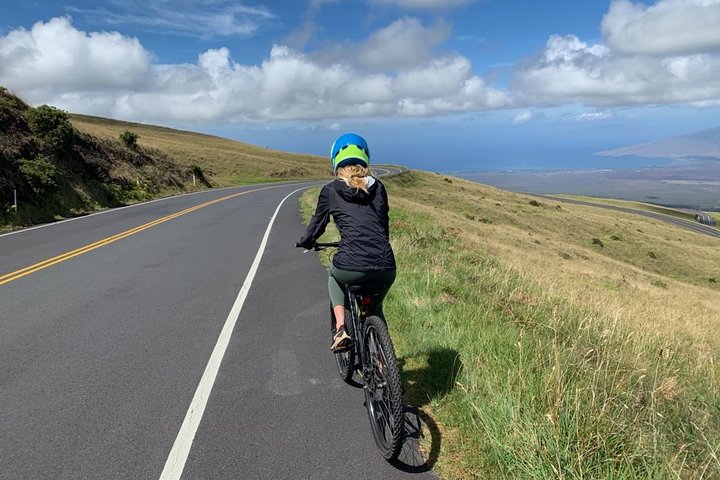
Our pick: Haleakala Downhill Bike Tour Self-Guided Ride with Maui Sunriders
Best for confident riders who want a self-paced Haleakalā descent from about 6,500 ft.
Before You Go
Haleakalā is easy to visit once you understand the basics. The big decisions are sunrise vs. sunset, how much time you want at the summit, and whether you plan to hike.
- Entrance fee — $30 per private vehicle.
- Payment — The park is cashless, so bring a card.
- Pass validity — Three days and valid for both the Summit and Kīpahulu districts.
- Sunrise reservations — Required for every vehicle entering the Summit District between 3 and 7 a.m.
- Time needed — At least half a day for the Summit District; a full day for a major hike.
- Top experiences — Sunrise, sunset, stargazing and Keoneheʻeheʻe (Sliding Sands) in the Summit District; Pīpīwai is in the separate Kīpahulu District, far away by road.
- Food & fuel — Neither is available inside the park.
- Cell service — Limited and unreliable.
Sunrise or Sunset?
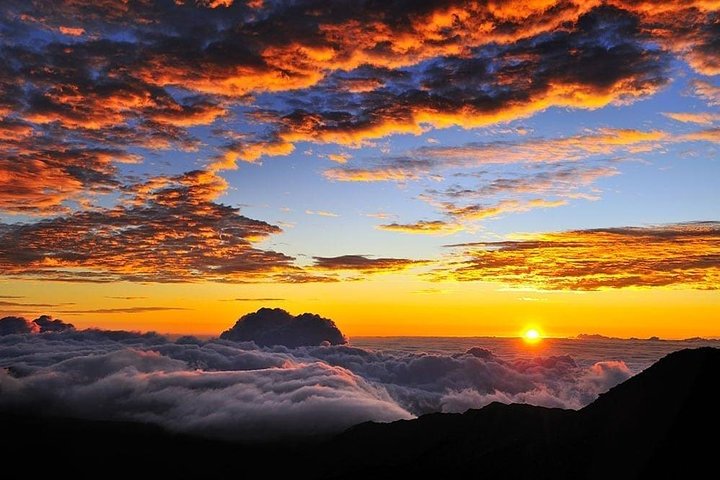
Sunrise feels like an awakening — energizing, inspiring and the start of a new day. It's the iconic Haleakalā experience and our pick if you don't mind the very early start.
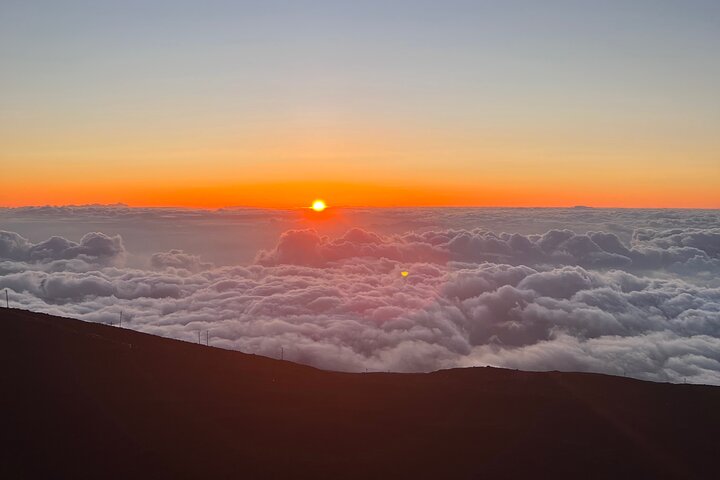
- Why go — Watch the sky come alive from 10,000 feet, often above a sea of clouds.
- The experience — Arrive in darkness and watch the colors change before, during and after sunrise.
- The risk — Cold, wind, fog and clouds can change the experience or block the sunrise completely.
Sunset is about slowing down, taking in the view and reflecting on the day. It's easier than sunrise and a great choice for families or anyone who doesn't want the pre-dawn wake-up.
- Why go — Beautiful crater, cloud and sunset views without getting up in the middle of the night.
- The bonus — Stargazing can turn sunset into a completely different Haleakalā experience.
Do not let reservation scarcity make the decision for you. Sunrise is iconic, but sunset is not a consolation prize. Pick the timing that leaves your group warm, awake and able to enjoy the mountain.
Sunrise: The Iconic Experience
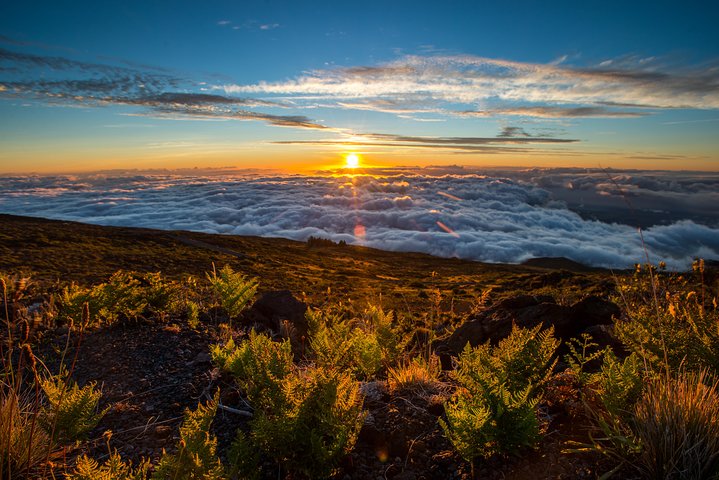
Sunrise is the classic Haleakalā experience — but it requires more planning. You need a vehicle reservation, a very early start and a drive up the mountain in the dark.
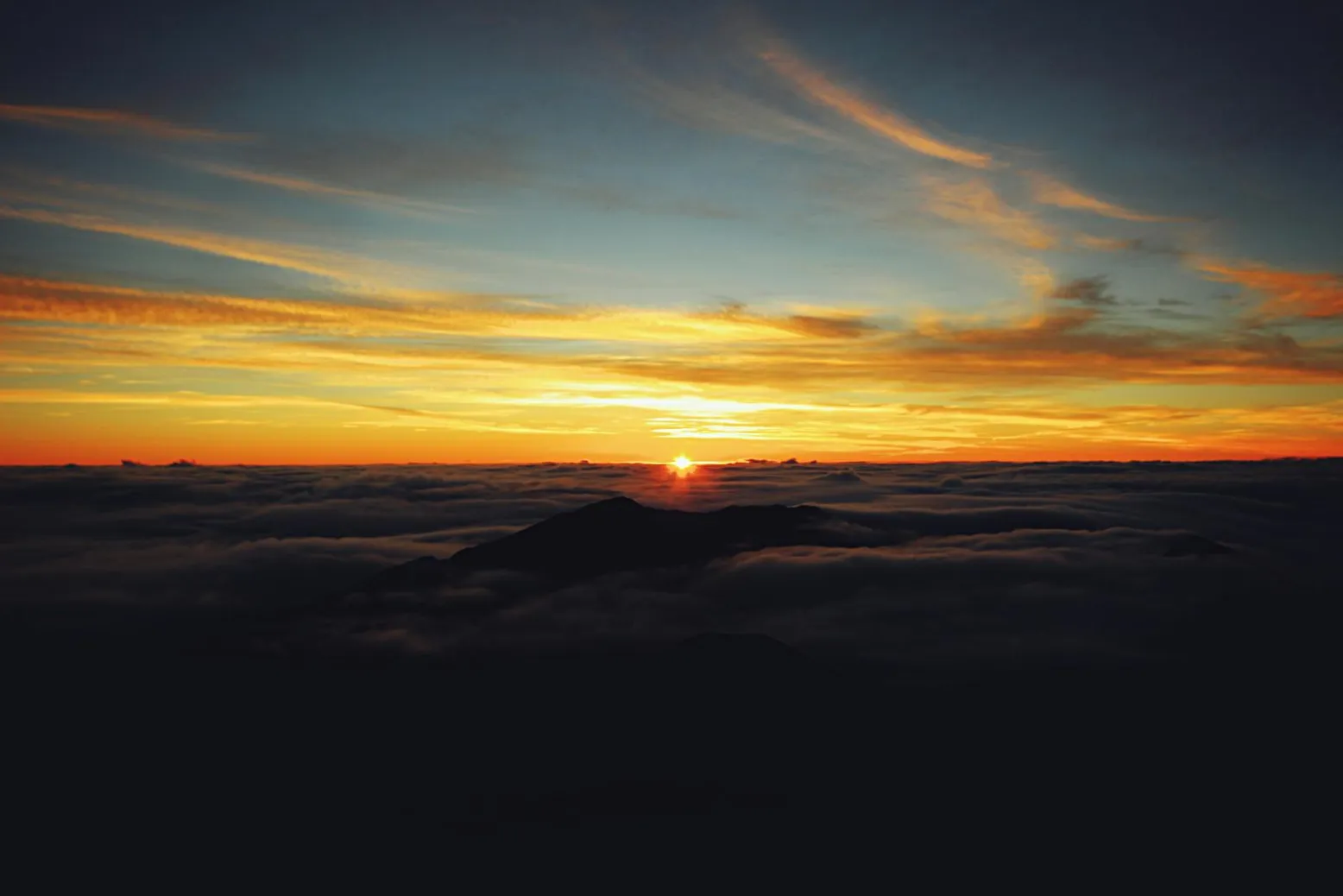
Sunrise from the Haleakalā summit. Photo: Hawaii Tourism Authority (HTA)
- Who needs a reservation — Every vehicle entering the Summit District between 3 and 7 a.m. Arrive after 7 a.m. and no sunrise reservation is required.
- Main release — 60 days ahead at 7 a.m. Hawaiʻi time.
- Second release — A smaller batch two days ahead, also at 7 a.m. Hawaiʻi time.
- Reservation fee — $1 per vehicle, in addition to park admission.
- Limit — One sunrise reservation per three-day period.
- Weather — Reservations are non-refundable, including for bad weather.
Popular dates can disappear quickly. Try the 60-day release first, then the two-day release if you miss it. If you still don't get one, choose sunset or visit during the day rather than building your trip around a reservation you don't have.
When to Leave
Give yourself more time than the map suggests. You still have the mountain drive, park entrance and walk from wherever you park.
- From Wailea — Leave about 2½–3 hours before sunrise.
- From Kāʻanapali — Leave about 3–3½ hours before sunrise.
The extra time matters. You don't want the final hour to become a race up a dark, winding mountain road.
Sunset: The Easier Experience
Sunset gives you the same mountain without the reservation or pre-dawn wake-up. It's the version we recommend to most visitors.
You can drive up in daylight, explore the summit and crater, watch the sunset and stay afterward for the stars.
The catch is parking. Sunset does not require a reservation, but that doesn't guarantee you'll get in. During the busy winter season, the park recommends arriving at least three hours before sunset, and vehicles may be turned around once summit parking reaches capacity.
That means arriving three hours before sunset — not leaving the beach three hours before.
Stay for the Stars
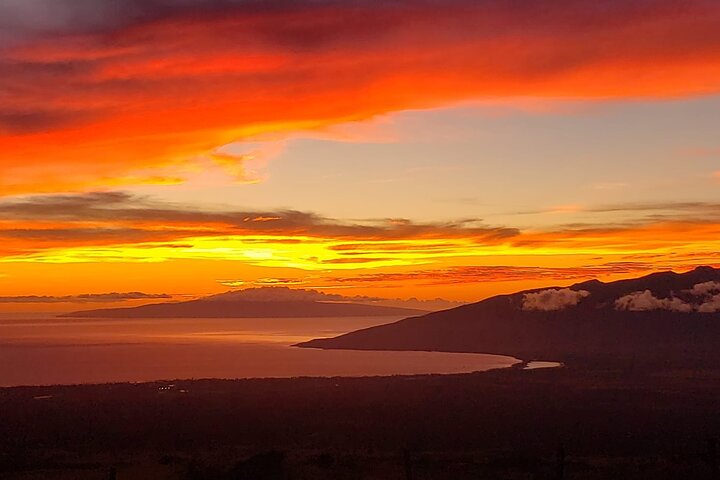
Don't leave as soon as the sun disappears. The colors often continue after sunset, and on a clear night the summit becomes one of Maui's best places to see the stars.
Bring warm layers and give your eyes time to adjust to the darkness.
Pair Haleakalā With Upcountry
If you're doing sunset, make an Upcountry day out of it.
Spend the morning or early afternoon in Makawao or Kula, eat before heading up the mountain, then continue steadily toward the summit.
Don't drive back down for dinner and then climb again for sunset. You'll spend half the day driving the same road twice.
Hiking Into the Crater
If hiking is the reason you're coming, visit during daylight and give Haleakalā the time it deserves.
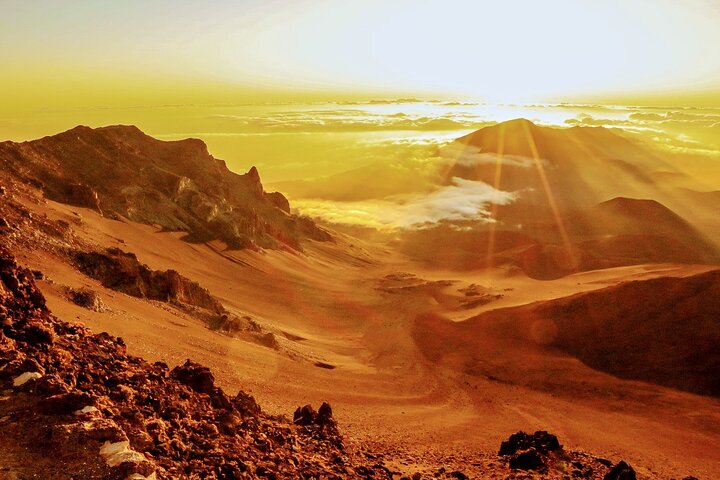
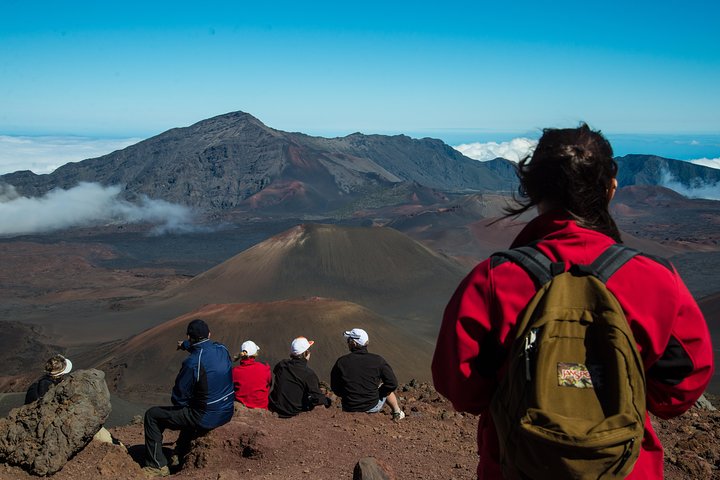
Keoneheʻeheʻe, better known as Sliding Sands Trail, takes you below the rim and into the crater. Just remember: the easy part comes first.
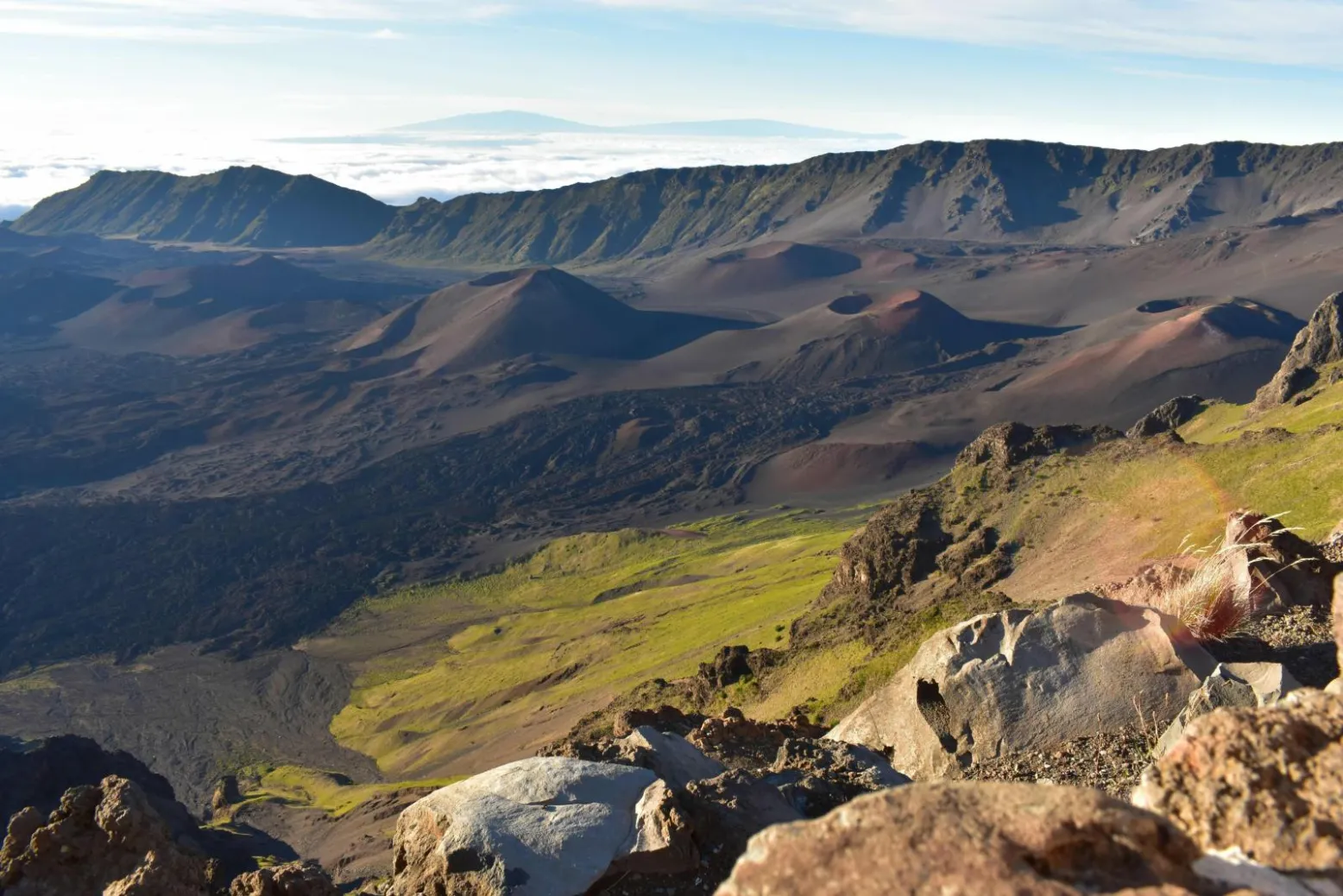
The crater floor is bigger than it photographs. Everything you can see here is a long way down and a long way back up. Photo: Hawaii Tourism Authority (HTA)
- Short version — Walk downhill for 30–60 minutes, enjoy the crater and turn around.
- The catch — The entire return is uphill at high elevation and takes considerably more effort.
- Full crater hike — Keoneheʻeheʻe to Halemauʻu is 11.2 miles.
- Difficulty — The National Park Service classifies the full route as extremely strenuous.
- Logistics — It is not a loop. You'll need a shuttle or a second vehicle at the opposite trailhead.
For most visitors who simply want to experience the crater, you don't need to hike the whole thing. Even a short descent below the rim gives you a completely different perspective.
Altitude, Cold, Wind & Clouds
At 10,023 feet, Haleakalā can feel nothing like the beach.
Temperatures can approach freezing, and strong winds make it feel even colder. Sunrise feels especially cold because you're standing still in the dark waiting for the light.
Wear long pants, closed shoes and several warm layers, including something that blocks the wind.
- Winter is less predictable — November through March generally brings more wind, rain and clouds.
- Clouds can be a good thing — The ideal setup is a clear summit with a layer of clouds below you, creating Haleakalā's famous "sea of clouds."
- Fog is different — If clouds move over the summit itself, they can block the crater, sunrise or sunset completely.
Check summit weather, not beach weather. Look at the Haleakalā summit forecast and webcam before heading up.
Altitude matters too. Move slowly if you feel light-headed, drink plenty of water and don't try to push through significant altitude symptoms.
Hours & Visitor Centers
The Summit District is open 24 hours, subject to weather, alerts and closures. Check current park conditions before heading up — especially for a pre-dawn sunrise drive.
- Haleakalā Visitor Center — Near the summit; open daily from sunrise to noon. It reopened on 21 May 2026 after repairs and building improvements.
- Park Headquarters Visitor Center — Lower on the mountain; open daily 8:30 a.m.–4:30 p.m.
- Staffing can affect hours — If you're going for sunset, assume the summit visitor center will be closed.
Don't Confuse the Two Districts
Haleakalā National Park has two completely separate areas: the Summit District and Kīpahulu District.
The Summit District is where you go for sunrise, sunset, stargazing and Sliding Sands.
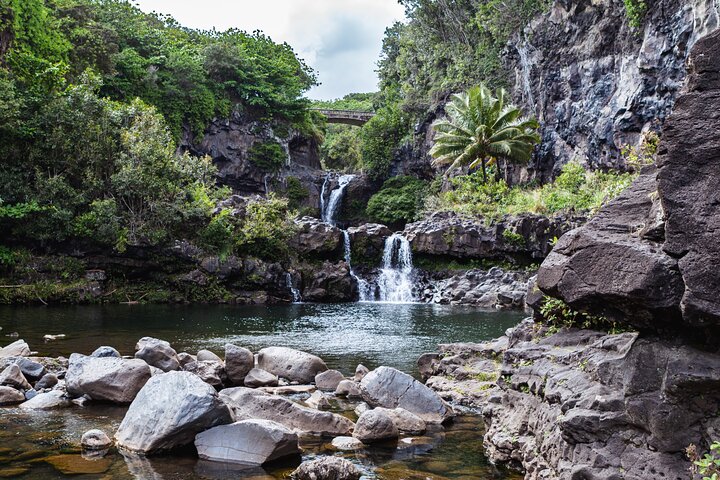
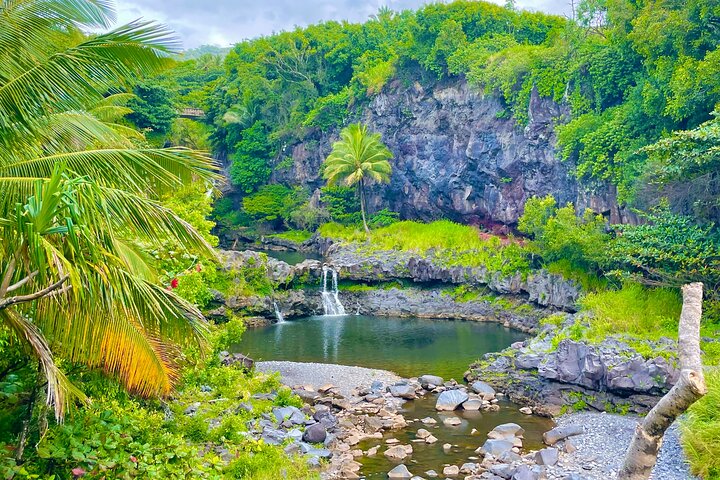
The Kīpahulu District is past Hāna and includes Pīpīwai Trail and the Pools of ʻOheʻo.
Your three-day park pass works for both, but don't try to visit them on the same day. Kīpahulu belongs with a Road to Hāna day.
Guided Tour or Self-Drive?
Book a guided tour if you don't want to handle the early-morning logistics, and self-drive if you mainly want the views, hiking or sunset. Choose a guided tour if you don't want to drive the mountain in the dark, deal with the sunrise reservation or manage the logistics yourself. A good tour earns its price by making the early morning easy.
Just show up. Self-drive if you're comfortable with the mountain road and mainly want the views, hiking or sunset. For sunset and daytime visits, self-driving gives you more flexibility to stop, hike and stay as long as you want.
Practical Tips
Fuel up before climbing. There is no gas inside Haleakalā National Park.
Bring food and water. There are no restaurants or food concessions inside the park.
Download what you need before you go. Cell service can be limited and unreliable.
Check park alerts the night before and again before leaving. Weather, alerts and closures change fast on the mountain.
Bring warmer clothes than you think you need. The summit can be dramatically colder than the beach.
For sunrise, book the reservation first. Don't build the rest of your itinerary around sunrise until you actually have it.
For sunset, arrive early. No reservation does not mean unlimited parking.
If you're hiking, start in daylight. The climb back is harder than the descent.
Use the three-day pass strategically. If you're also driving the Road to Hāna, you can use the same park pass for Kīpahulu on a separate day.
One Last Tip
Choose the version of Haleakalā that gives you time to experience it.
A calm sunset, a short daylight crater walk or a well-planned sunrise is better than forcing the mountain into an already crowded day.
Plan it day by day: Upcountry Maui Itinerary for 1, 2 or 3 Days, Upcountry Maui Itinerary for 4 or 5 Days and Upcountry Maui Itinerary for 6 or 7 Plus Days.













Frequently Asked Questions
Do I need a reservation for sunrise?
Yes, you need a reservation for any vehicle entering the Summit District between 3 and 7 a.m. Reservations release 60 days ahead and again two days ahead, both at 7 a.m. Hawaiʻi time.
Do I need a reservation for sunset?
No, you do not need a reservation for sunset. Sunset and daytime entry need no reservation.
Should I do Haleakalā sunrise or sunset?
Choose sunrise for the iconic experience and sunset for easier logistics. We genuinely like both.
How cold is the Haleakalā summit at sunrise?
The Haleakalā summit at sunrise is much colder than the beach, and windier. Dress for a cold morning or evening, not for Hawaiʻi.
Is Haleakalā sunset good with kids?
Yes, Haleakalā sunset is good with kids, but altitude, cold and the schedule matter. Sunset is usually the easier version for families.
What happens if clouds obscure the sunrise?
If clouds obscure the sunrise, nothing is refunded. Sunrise reservations are non-refundable, weather included.
How early should I arrive for sunset?
The park recommends at least 3 hours before sunset during the busy winter season, and vehicles can be turned around once capacity is reached.
Can I stay for the stars after sunset?
Yes, and it is the best reason to choose sunset. Staying afterward for the stars can make it just as special as sunrise.
Is the sunrise view actually better than sunset?
No, the sunrise view is not actually better than sunset. It is earlier, colder and harder to get, and the thing that makes it memorable is having been there for it.